This is being reported by a left-leaning, Obama praising media organization.
Tangibles
Prepare
Pray
Showing posts with label Banking. Show all posts
Showing posts with label Banking. Show all posts
Tuesday, November 27, 2012

Monday, November 26, 2012
Debt Ceiling Eliminated
Well, not yet....but it is coming.
Now, if he thinks this will solve the problem he is more of an idiot than I thought. The rest of the world will see that we are fiscally irresponsible (which they are starting to believe) and will sell off any dollars they hold. If that happens the trust in the USD will drop like a rock. You will see runs on banks, but that will be too late. We will head into a hyperinflation where we will be seeing prices changing daily or even every few hours. Look at Zimbabwe, or Wiemar Republic.
Tangibles
Gold
Silver
Food
Ammo
Real Estate
Now, if he thinks this will solve the problem he is more of an idiot than I thought. The rest of the world will see that we are fiscally irresponsible (which they are starting to believe) and will sell off any dollars they hold. If that happens the trust in the USD will drop like a rock. You will see runs on banks, but that will be too late. We will head into a hyperinflation where we will be seeing prices changing daily or even every few hours. Look at Zimbabwe, or Wiemar Republic.
Tangibles
Gold
Silver
Food
Ammo
Real Estate
Thursday, November 15, 2012
This Is Bad
Well, my teenagers say that math sucks. I disagree. Math when done properly tells the truth. I bet that Spend More Ben is thinking that math sucks though as he tries to figure out another way to offset the truth. It cannot be done as the math will always win.
The UNEMPLOYMENT INSURANCE WEEKLY CLAIMS REPORT came out today. The seasonally adjusted initial claims was 439,000, an increase of 78,000 from the previous week's revised figure of 361,000. The 4-week moving average was 383,750, an increase of 11,750 from the previous week's revised average of 372,000.
Now, they claim that it is because of the Superstorm Sandy. I call B.S. on that. Sure it probably accounts for some of the claims, but I would bet that the majority are from the claims that had been "back-logged" from the few weeks before the election.
Watch these reports through the end of the year, if they continue to decline or plateau, watch how the market reacts.
Hold on!
Prepare
Food
Pay off bills
Silver
The UNEMPLOYMENT INSURANCE WEEKLY CLAIMS REPORT came out today. The seasonally adjusted initial claims was 439,000, an increase of 78,000 from the previous week's revised figure of 361,000. The 4-week moving average was 383,750, an increase of 11,750 from the previous week's revised average of 372,000.
Now, they claim that it is because of the Superstorm Sandy. I call B.S. on that. Sure it probably accounts for some of the claims, but I would bet that the majority are from the claims that had been "back-logged" from the few weeks before the election.
Watch these reports through the end of the year, if they continue to decline or plateau, watch how the market reacts.
Hold on!
Prepare
Food
Pay off bills
Silver
Saturday, October 13, 2012
Wednesday, September 19, 2012
Friday, August 17, 2012
Insanity Gone Wild
You have heard of Girls gone wild, but the next story should be labeled Insanity gone wild. What does that mean, you say? Well after you read this article you will say "that's insane". Who was the PhD that thought of this deal? And better yet, is he still employed? Let me break down a few points of the article for you.
The government agreed to keep Fannie and Freddie afloat four years ago
through a complex arrangement where the Treasury injects capital into
the firms as needed every quarter to keep them afloat, and it receives
preferred shares in exchange. Those shares pay a 10% dividend.
Well there you have it. It starts out pretty good, except for the 10% dividend. Why 10% when the common folk only gets maybe 2% interest. Okay, I know, because it was a risky loan. I mean, it is a government agency, US Treasury Department, bailing out Freddie and Fannie who are other government directed agencies.
But the arrangement wasn’t expected to last this long. Congress and the
Obama administration have taken few steps towards advancing any
overhaul. That has led to perverse outcomes like the one currently
facing the companies: Even if they’re profitable, there’s no mechanism
for them to pay off the government–and they may continue to borrow money
simply to pay those dividends.
Look at that section highlighted in red. Read it again and let it sink in until the light bulb comes on over your head. Yep, I see the lights on...you have figured it out. They may have to continue to borrow money just to pay the dividends. Now you might have thought, "well the economy has tanked further than anyone expected, so they may have to wait for the housing industry rebounds before profits return enough to pay those dividends". That is until you read this:
Fannie currently has to pay $12 billion in dividends every year. That’s more than the company has ever earned in one year.
Wow, more than they have ever earned in one year! Again, where were the PhD's and Accountants that are paid to figure these things out BEFORE they sign the contract. Anyone involved with approving this contract should be fired.
In 2009, the Treasury Department said it would provide unlimited help
for three years. But beginning in January, the companies once again will
have a fixed amount of money available from the Treasury: $125 billion
for Fannie and $150 billion for Freddie.
Really, did they not learn the first time? Insanity Gone Wild I tell you. We peasants should be outraged as this is our money they play with. These actions cannot be sustained. The house of cards will collapse.
Well
Friday, April 22, 2011
Monday, March 7, 2011
We Are Doomed If This Continues
The U.S. Treasury is depleting its cash at an accelerating pace, drawing down its cash balance by $81.6 billion in the just the first four days of March, leaving the federal government with only $108.9 billion on hand, according to the Daily Treasury Statement released Monday afternoon.
At the beginning of February, the Treasury had $349.1 billion in cash on hand, but spent that down by $158.5 billion during the month, ending February with only $190.6 billion on hand.
Were the government to continue to draw down its cash balance at the $20.4 billion-per-day rate that prevailed in the first four days of March, it would spend its way through its final $108.9 billion in little more than five days.
Under current law, the U.S. Treasury may only run the national debt up to $14.294 trillion. At the end of February, according to the Treasury’s Monthly Statement of the Public Debt, the total debt subject to this legal limit was $14.142331 trillion—just $151.669 billion short of the limit.
Had the Treasury not spent down the $81.6 billion in its cash balance in the first four days of this month and borrowed that money instead, it would have significantly reduced its remaining legal borrowing authority.
For the Treasury to borrow more than the current $14,294 limit, Congress and President Barack Obama will need to enact new legislation authorizing the Treasury to increase the national debt up to whatever new limit they find agreeable.
The Treasury’s largest single expenditure in the first four days of March, according to the Daily Treasury Statement, was paying off maturing debt. During those four days, Treasury paid $128.477 billion to redeem old bonds. At the same time, it borrowed $133.196 billion by selling new bonds.
People wake up. We are sliding down the mountain faster than ever. Just in the month of February 2011 our defict was greater than the entire yearly deficit in 2007. That was just four years ago! Where will be in just another 4 months or 4 years? Get some GOLD and SILVER. Even at todays prices it will seem like a bargain in the future. I would not be surprised to see 1oz of gold to be able to purchase a nice home in the future.
At the beginning of February, the Treasury had $349.1 billion in cash on hand, but spent that down by $158.5 billion during the month, ending February with only $190.6 billion on hand.
Were the government to continue to draw down its cash balance at the $20.4 billion-per-day rate that prevailed in the first four days of March, it would spend its way through its final $108.9 billion in little more than five days.
Under current law, the U.S. Treasury may only run the national debt up to $14.294 trillion. At the end of February, according to the Treasury’s Monthly Statement of the Public Debt, the total debt subject to this legal limit was $14.142331 trillion—just $151.669 billion short of the limit.
Had the Treasury not spent down the $81.6 billion in its cash balance in the first four days of this month and borrowed that money instead, it would have significantly reduced its remaining legal borrowing authority.
For the Treasury to borrow more than the current $14,294 limit, Congress and President Barack Obama will need to enact new legislation authorizing the Treasury to increase the national debt up to whatever new limit they find agreeable.
The Treasury’s largest single expenditure in the first four days of March, according to the Daily Treasury Statement, was paying off maturing debt. During those four days, Treasury paid $128.477 billion to redeem old bonds. At the same time, it borrowed $133.196 billion by selling new bonds.
People wake up. We are sliding down the mountain faster than ever. Just in the month of February 2011 our defict was greater than the entire yearly deficit in 2007. That was just four years ago! Where will be in just another 4 months or 4 years? Get some GOLD and SILVER. Even at todays prices it will seem like a bargain in the future. I would not be surprised to see 1oz of gold to be able to purchase a nice home in the future.
Saturday, March 5, 2011
You Heard Of Sam Zell?
He is a Billionaire! I have highlighted some comments I feel are very telling.
Look at what he is saying:
ZELL ON THE DOLLAR LONG:
"YOU ASK ME ME WHAT IS MY BIGGEST SINGLE FINANCIAL CONCERN IS THE LOSS OF THE DOLLAR AS THE RESERVE CURRENCY I CAN'T IMAGINE ANYTHING BEING MORE DISASTROUS TO OUR COUNTRY THAT IF THE DOLLAR LOST ITS RESERVE CURRENCY STATUS."
Zell: Dollar's Global Fall Will Be 'Disastrous’ for US Living Standard
Thursday, 03 Mar 2011 12:27 PM
Billionaire real-estate magnate Sam Zell warns that Americans should brace for a "disastrous" 25 percent decline in the standard of living if the U.S. dollar’s reign as the global reserve currency ever ends.
He says that there are signs in the market that it could eventually happen. As it is now, a Korean manufacturer who wants to sell to Brazil must first buy dollars to complete the deal. If countries decide to bypass the dollar, the effect would be a disaster, Zell says.
Sam Zell
"Frankly, I think we’re at a tipping point. What’s my biggest single financial concern is the loss of the dollar as the reserve currency," he told CNBC in an interview. "I can’t imagine anything being more disastrous to our country than if the dollar lost its reserve-currency status."
Although he is "hoping against hope" the dollar remains the standard for international exchange, he warns that "you’re already seeing things in the markets that are suggesting that confidence in the dollar is waning."
If that happens, the impact on the United States would be deep. "I think you could see a 25 percent reduction in the standard of living in this country if the U.S. dollar was no longer the world’s reserve currency," Zell said "That’s how valuable it is."
Zell says that the bond market seems remarkably complacent about the risk. But that could turn on a dime, he warns.
"The worry in the bond market is never there until it’s there. The dollar has gone down 20 percent in the last three or four years," Zell says. "I don’t know who is buying 30-year fixed-rate debt. I don’t understand TIPs (Treasury inflation-protected bonds) that are projecting 30 years of benign inflation."
Benchmark 10-year Treasury note yields are around 3.48 percent. TIPs maturing in 2041 have a yield of 1.96 percent.
Once the world turns on the U.S. dollar, if it does, things will change fast, Zell warns. "How could interest rates not go up? Either they go up or the dollar goes down, one or the other," Zell says.
As for inflation, he estimates that actual inflation is between 5 percent and 7 percent right now, despite government figures showing the CPI flirting with low single digits. Fear of deflation — prices falling out of control — has been the primary motivator at the Federal Reserve to pump up money supply by more than $2 trillion in recent months.
Nevertheless, oil is rising fast and food riots are breaking out in developing countries. The United States has been less affected until recently. Zell points out that our Consumer Price Index tends to hide inflation by counting depressed home prices at 42 percent of the index.
"If you adjusted the CPI to reality you’re probably looking at 5, 6, 7 percent inflation today," Zell says.
"The reality out there is the costs are going up. The fact that we’ve been massive beneficiaries of Chinese mercantilist policies that have allowed us to buy goods at much less than their fair value. That has hurt us on the manufacturing side, but it has been a subsidy to America. That subsidy is coming to an end."
Others agree with Zell that the dollar’s world dominance will soon fade.
Ray Dalio, founder & CIO of Bridgewater Associates, told CNBC that it is "inevitable that the dollar's role as the world's currency will diminish from the dominant world currency to one of a few."
"It will fade probably fairly quickly so the United States which accounts for almost two-thirds of the reserves will probably go down to 50 percent of the world's reserves and it will have an effect on lending," he added.
Meanwhile, Bill Gross, found of bond giant Pimco, recently told investors that the Fed’s heavy thumb on the scales on behalf of low interests was perhaps necessary given the magnitude of the crisis. The second round of easing known as "QE2," perhaps, also had a role to play.
However, as the deadline for the second round to end looms — it is set to expire in June — there are serious questions about whether a smooth transition to private demand for U.S. debt will appear, Gross said.
Stocks have doubled from the March 2009 bottom and marked steadily upward since the second round was announced in August, which has given some stock investors pause.
"Investors should view June 30, 2011 not as political historians view Nov. 11, 1918 (Armistice Day — a day of reconciliation and healing) but more like June 6, 1944 (D-Day — a day fraught with hope for victory, but fueled with immediate uncertainty and fear as to what would happen in the short term)," Gross said in recent commentary online.
"Bond yields and stock prices are resting on an artificial foundation of QE2 credit that may or may not lead to a successful private-market handoff and stability in currency and financial markets."
-END-
People, I have said this before (pretty much from the start of this blog) you need to PREPARE. We have seen inflation (just look at your grocery bill and gas bill) and after QE2 is finished (June 30, 2011) we may see hyperinflation. If you think things are expensive now, wait until hyperinflation hits. You will need food and supplies. Here is a good place to start http://www.jrhenterprises.com/.
Look at what he is saying:
ZELL ON THE DOLLAR LONG:
"YOU ASK ME ME WHAT IS MY BIGGEST SINGLE FINANCIAL CONCERN IS THE LOSS OF THE DOLLAR AS THE RESERVE CURRENCY I CAN'T IMAGINE ANYTHING BEING MORE DISASTROUS TO OUR COUNTRY THAT IF THE DOLLAR LOST ITS RESERVE CURRENCY STATUS."
Zell: Dollar's Global Fall Will Be 'Disastrous’ for US Living Standard
Thursday, 03 Mar 2011 12:27 PM
Billionaire real-estate magnate Sam Zell warns that Americans should brace for a "disastrous" 25 percent decline in the standard of living if the U.S. dollar’s reign as the global reserve currency ever ends.
He says that there are signs in the market that it could eventually happen. As it is now, a Korean manufacturer who wants to sell to Brazil must first buy dollars to complete the deal. If countries decide to bypass the dollar, the effect would be a disaster, Zell says.
Sam Zell
"Frankly, I think we’re at a tipping point. What’s my biggest single financial concern is the loss of the dollar as the reserve currency," he told CNBC in an interview. "I can’t imagine anything being more disastrous to our country than if the dollar lost its reserve-currency status."
Although he is "hoping against hope" the dollar remains the standard for international exchange, he warns that "you’re already seeing things in the markets that are suggesting that confidence in the dollar is waning."
If that happens, the impact on the United States would be deep. "I think you could see a 25 percent reduction in the standard of living in this country if the U.S. dollar was no longer the world’s reserve currency," Zell said "That’s how valuable it is."
Zell says that the bond market seems remarkably complacent about the risk. But that could turn on a dime, he warns.
"The worry in the bond market is never there until it’s there. The dollar has gone down 20 percent in the last three or four years," Zell says. "I don’t know who is buying 30-year fixed-rate debt. I don’t understand TIPs (Treasury inflation-protected bonds) that are projecting 30 years of benign inflation."
Benchmark 10-year Treasury note yields are around 3.48 percent. TIPs maturing in 2041 have a yield of 1.96 percent.
Once the world turns on the U.S. dollar, if it does, things will change fast, Zell warns. "How could interest rates not go up? Either they go up or the dollar goes down, one or the other," Zell says.
As for inflation, he estimates that actual inflation is between 5 percent and 7 percent right now, despite government figures showing the CPI flirting with low single digits. Fear of deflation — prices falling out of control — has been the primary motivator at the Federal Reserve to pump up money supply by more than $2 trillion in recent months.
Nevertheless, oil is rising fast and food riots are breaking out in developing countries. The United States has been less affected until recently. Zell points out that our Consumer Price Index tends to hide inflation by counting depressed home prices at 42 percent of the index.
"If you adjusted the CPI to reality you’re probably looking at 5, 6, 7 percent inflation today," Zell says.
"The reality out there is the costs are going up. The fact that we’ve been massive beneficiaries of Chinese mercantilist policies that have allowed us to buy goods at much less than their fair value. That has hurt us on the manufacturing side, but it has been a subsidy to America. That subsidy is coming to an end."
Others agree with Zell that the dollar’s world dominance will soon fade.
Ray Dalio, founder & CIO of Bridgewater Associates, told CNBC that it is "inevitable that the dollar's role as the world's currency will diminish from the dominant world currency to one of a few."
"It will fade probably fairly quickly so the United States which accounts for almost two-thirds of the reserves will probably go down to 50 percent of the world's reserves and it will have an effect on lending," he added.
Meanwhile, Bill Gross, found of bond giant Pimco, recently told investors that the Fed’s heavy thumb on the scales on behalf of low interests was perhaps necessary given the magnitude of the crisis. The second round of easing known as "QE2," perhaps, also had a role to play.
However, as the deadline for the second round to end looms — it is set to expire in June — there are serious questions about whether a smooth transition to private demand for U.S. debt will appear, Gross said.
Stocks have doubled from the March 2009 bottom and marked steadily upward since the second round was announced in August, which has given some stock investors pause.
"Investors should view June 30, 2011 not as political historians view Nov. 11, 1918 (Armistice Day — a day of reconciliation and healing) but more like June 6, 1944 (D-Day — a day fraught with hope for victory, but fueled with immediate uncertainty and fear as to what would happen in the short term)," Gross said in recent commentary online.
"Bond yields and stock prices are resting on an artificial foundation of QE2 credit that may or may not lead to a successful private-market handoff and stability in currency and financial markets."
-END-
People, I have said this before (pretty much from the start of this blog) you need to PREPARE. We have seen inflation (just look at your grocery bill and gas bill) and after QE2 is finished (June 30, 2011) we may see hyperinflation. If you think things are expensive now, wait until hyperinflation hits. You will need food and supplies. Here is a good place to start http://www.jrhenterprises.com/.
Saturday, February 12, 2011
Is Another Financial Crash Certain?
After reading this article, it would seem we are in serious financial trouble.
Why Another Financial Crash is Certain
Here is some excerpts. Look at some of the numbers the author quotes. I had not heard of number this high!
Why Another Financial Crash is Certain
Here is some excerpts. Look at some of the numbers the author quotes. I had not heard of number this high!
On August 9, 2007, an incident took place at a bank in France that touched-off a financial crisis that that would eventually wipe out more than $30 trillion in capital and thrust the world into the deepest slump since the Great Depression. The event was recounted in a speech by Pimco's managing director Paul McCulley, at the 19th Annual Hyman Minsky Conference on the State of the U.S. and World Economies. Here's an excerpt from McCulley's speech:
"If you have to pick a day for the Minsky Moment, it was August 9. And, actually, it didn’t happen here in the United States. It happened in France, when Paribas Bank (BNP) said that it could not value the toxic mortgage assets in three of its off-balance sheet vehicles, and that, therefore, the liability holders, who thought they could get out at any time, were frozen. I remember the day like my son’s birthday. And that happens every year. Because the unraveling started on that day. In fact, it was later that month that I actually coined the term “Shadow Banking System” at the Fed’s annual symposium in Jackson Hole.“It was only my second year there. And I was in awe, and mainly listened for most of the three days. At the end....I stood up and (paraphrasing) said, ‘What’s going on is really simple. We’re having a run on the Shadow Banking System and the only question is how intensely it will self-feed as its assets and liabilities are put back onto the balance sheet of the conventional banking system.’”
Subprime was the spark that lit the fuse, but subprime wasn't big enough to bring down the whole financial system. That would take bigger ructions in the shadow banking system. Here's an excerpt from an article by Nomi Prins which explains how much money was involved:
Dodd-Frank – the financial reform act -- is riddled with loopholes and doesn't really resolve the central issues of loan quality, additional capital, or risk retention. Banks are still free to issue bogus mortgages to unemployed applicants with bad credit, just as they were before the meltdown."Between 2002 and early 2008, roughly $1.4 trillion worth of sub-prime loans were originated by now-fallen lenders like New Century Financial. If such loans were our only problem, the theoretical solution would have involved the government subsidizing these mortgages for the maximum cost of $1.4 trillion. However, according to Thomson Reuters, nearly $14 trillion worth of complex-securitized products were created, predominantly on top of them, precisely because leveraged funds abetted every step of their production and dispersion. Thus, at the height of federal payouts in July 2009, the government had put up $17.5 trillion to support Wall Street's pyramid Ponzi system, not $1.4 trillion." ("Shadow Banking", Nomi Prins, The American Prospect)
President Barack Obama understands the basic problem, but he also knows that he won't be reelected without Wall Street's help. That's why he promised to further reduce "burdensome" regulations in the Wall Street Journal just two weeks ago. His op-ed was intended to preempt the release of the Financial Crisis Inquiry Commission's (FCIC) report, which was expected to make recommendations for strengthening existing regulations. Obama torpedoed that effort by coming down on the side of big finance. Now, it's only a matter of time before another crash.
So, between $4 to $7 trillion vanished in a flash after Lehman Brothers blew up.
Ironically, the New York Fed doesn't even try to deny the source of the problem; deregulation. Here's what they say in the report: "Regulatory arbitrage was the root motivation for many shadow banks to exist."
What does that mean? It means that Wall Street knows that it's easier to make money by eliminating the rules....the very rules that protect the public from the predation of avaricious speculators.
The only way to fix the system is to regulate all financial institutions that act like banks. No exceptions.
After reading the whole article you will see why we are still up to our eyes in trouble.
Prepare.....
Thursday, December 30, 2010
The Big Fed Con
To understand how the Fed works, how the big banks work and how our politicians work, watch these two videos.
Saturday, December 18, 2010
Look Here...
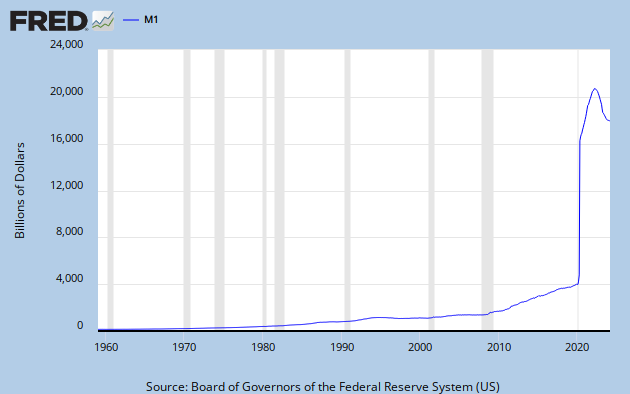
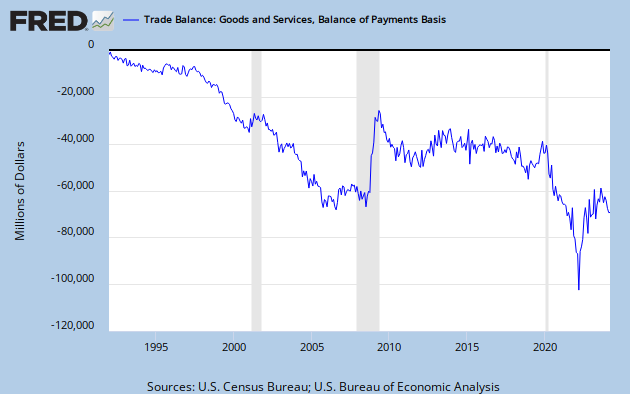
Here are a couple things that should have you concerned....


Federal Government Debt
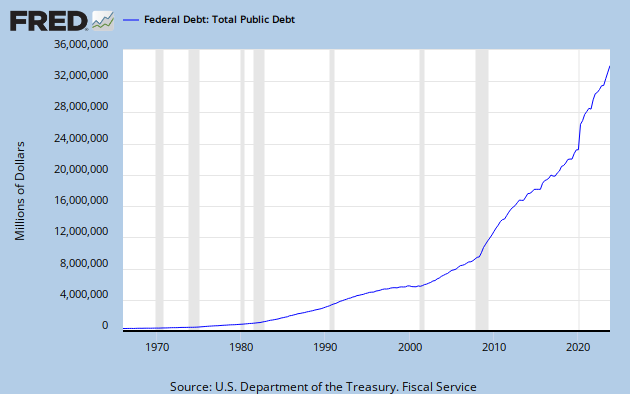
Federal Surplus or Deficit

Money Stock (money in ciculation)
Trade Balance (looks like we are losing about $40 billion a year)
Non performing loans at banks
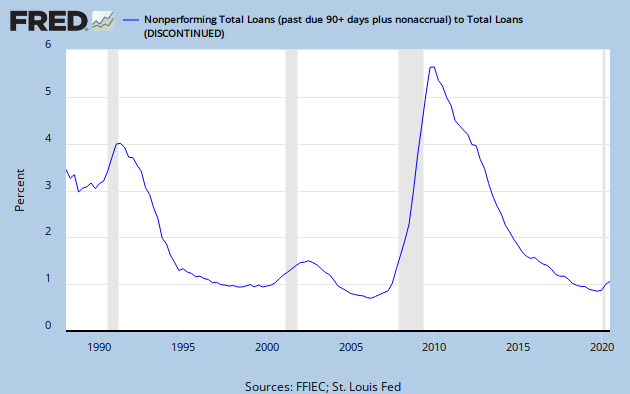
Makes you say...hmmm.
Keep your eyes open and start preparing.
Saturday, November 20, 2010
Six More To The Banking Morgue
Tifton Banking Company--Tifton, GA
Copper Star Bank--Scottsdale, AZ
First Banking Center--Burlington, WI
Gulf State Community Bank--Carabelle, FL
Allegiance Bank of North America--Bala Cynwyd, PA
Darby Bank & Trust--Vidalia, GA
Copper Star Bank--Scottsdale, AZ
First Banking Center--Burlington, WI
Gulf State Community Bank--Carabelle, FL
Allegiance Bank of North America--Bala Cynwyd, PA
Darby Bank & Trust--Vidalia, GA
Friday, November 19, 2010
I keep Smelling A Rat(s)
A Closer Look At FDIC Bank Closures
I know, we have been smelling a rat for a while. Well when you examine the bank closures closely the stinch becomes quite strong. The above analysis looked a just 38 banks closed by the FDIC between August 6, 2010, and November 12, 2010. Below is the crux of the article.
In the overwhelming majority of cases (30 closings out of 38), resolution of the failures was accomplished by way of the FDIC entering into loss share agreements covering a high percentage of the assets taken over by the successor banks. In connection with these 30 closings, the FDIC entered into new loss-share agreements covering an additional $8.2 billion in assets.
That brings the total face value of assets covered by FDIC loss share agreements up to about $189 billion. As we have discussed in the past, these loss share agreements typically guarantee at least 80% of the value of assets over a period of eight to ten years.
This is another form of quantitative easing being practiced by the federal government.
Taking the 38 failed banks as a whole, they had declared assets of $13.78 billion and deposits of $11.97 billion. The FDIC estimated the closings cost $2.72 billion, meaning the banks’ assets were really only worth $9.25 billion. Overall, bank management overvalued assets by $4.53 billion, around 49%.
Specific examples were far worse:
Maritime Savings Bank of West Allis, Wisconsin, had stated assets of $350.5 million and deposits of $248.1 million. The FDIC estimated its closing cost $83.6 million. Based on that estimate, the bank’s assets were really only worth $164.5 million, and had been overvalued by 113%.
ShoreBank of Chicago, Illinois, had stated assets of $2.16 billion and deposits of $1.54 billion. The FDIC estimated its closing cost about $370 million. Based on that estimate, the bank’s assets were really only worth about $1.17 billion, and had been overvalued by 84%.
Premier Bank of Jefferson City, Missouri, had stated assets of $1.18 billion and deposits of $1.03 billion. The FDIC estimated its closing cost $407 million. Based on that estimate, the bank’s assets were really only worth $623 million, and had been overvalued by 84%.
K Bank of Randallstown, Maryland, had stated assets of $538.3 million and deposits of $500.1 million. The FDIC estimated its closing cost $198.4 million. Based on that estimate, the bank’s assets were really only worth $301.7 million, and had been overvalued by 78%.
Finally, Horizon Bank of Bradenton, Florida, had stated assets of $187.8 million and deposits of $164.6 million. The FDIC estimated its closing cost $58.9 million. Based on that estimate, the bank’s assets were really only worth $105.7 million, and had been overvalued by 78%.
The FDIC’s closure of 38 banks over three months is by no means an insignificant number. However, in the context of the FDIC’s overhang of troubled banks, it suggests the pace of bank closings is being kept artificially low.
As of April 2010, there were about 425 banks operating under serious FDIC enforcement orders that called into question the banks’ solvency. Since then, upwards of 25 new banks have come under such orders each month.
Therefore, closing 13 banks a month has done nothing to reduce the backlog of troubled banks operating in the Country. That backlog could only have grown.
Most likely, the pace of bank closings had been held back artificially by the need to keep up appearances for the benefit of the mid-term elections. With those now behind us, I would expect the pace of bank closings to accelerate considerably.
Let's keep our eyes on this and see if the closings accelerate.
I know, we have been smelling a rat for a while. Well when you examine the bank closures closely the stinch becomes quite strong. The above analysis looked a just 38 banks closed by the FDIC between August 6, 2010, and November 12, 2010. Below is the crux of the article.
In the overwhelming majority of cases (30 closings out of 38), resolution of the failures was accomplished by way of the FDIC entering into loss share agreements covering a high percentage of the assets taken over by the successor banks. In connection with these 30 closings, the FDIC entered into new loss-share agreements covering an additional $8.2 billion in assets.
That brings the total face value of assets covered by FDIC loss share agreements up to about $189 billion. As we have discussed in the past, these loss share agreements typically guarantee at least 80% of the value of assets over a period of eight to ten years.
This is another form of quantitative easing being practiced by the federal government.
Taking the 38 failed banks as a whole, they had declared assets of $13.78 billion and deposits of $11.97 billion. The FDIC estimated the closings cost $2.72 billion, meaning the banks’ assets were really only worth $9.25 billion. Overall, bank management overvalued assets by $4.53 billion, around 49%.
Specific examples were far worse:
Maritime Savings Bank of West Allis, Wisconsin, had stated assets of $350.5 million and deposits of $248.1 million. The FDIC estimated its closing cost $83.6 million. Based on that estimate, the bank’s assets were really only worth $164.5 million, and had been overvalued by 113%.
ShoreBank of Chicago, Illinois, had stated assets of $2.16 billion and deposits of $1.54 billion. The FDIC estimated its closing cost about $370 million. Based on that estimate, the bank’s assets were really only worth about $1.17 billion, and had been overvalued by 84%.
Premier Bank of Jefferson City, Missouri, had stated assets of $1.18 billion and deposits of $1.03 billion. The FDIC estimated its closing cost $407 million. Based on that estimate, the bank’s assets were really only worth $623 million, and had been overvalued by 84%.
K Bank of Randallstown, Maryland, had stated assets of $538.3 million and deposits of $500.1 million. The FDIC estimated its closing cost $198.4 million. Based on that estimate, the bank’s assets were really only worth $301.7 million, and had been overvalued by 78%.
Finally, Horizon Bank of Bradenton, Florida, had stated assets of $187.8 million and deposits of $164.6 million. The FDIC estimated its closing cost $58.9 million. Based on that estimate, the bank’s assets were really only worth $105.7 million, and had been overvalued by 78%.
The FDIC’s closure of 38 banks over three months is by no means an insignificant number. However, in the context of the FDIC’s overhang of troubled banks, it suggests the pace of bank closings is being kept artificially low.
As of April 2010, there were about 425 banks operating under serious FDIC enforcement orders that called into question the banks’ solvency. Since then, upwards of 25 new banks have come under such orders each month.
Therefore, closing 13 banks a month has done nothing to reduce the backlog of troubled banks operating in the Country. That backlog could only have grown.
Most likely, the pace of bank closings had been held back artificially by the need to keep up appearances for the benefit of the mid-term elections. With those now behind us, I would expect the pace of bank closings to accelerate considerably.
Let's keep our eyes on this and see if the closings accelerate.
Wednesday, November 17, 2010
Thursday, November 11, 2010
WHAT Did He Say?
At about 0:13 into the video, you can here him say, "Things were being done which were certainly illegal and clearly criminal in certain cases..."
Alan Greenspan, the former Federal Reserve Chairman tells us there was criminal activity happening, so tell me why there are no bankers wearing the shiney nickel plated handcuffs.
Now go back and watch Ben Bernake, the current Federal Reserve Chairman, when Mr. Greenspan mentioned the "illegal and criminal" words.
Alan Greenspan, the former Federal Reserve Chairman tells us there was criminal activity happening, so tell me why there are no bankers wearing the shiney nickel plated handcuffs.
Now go back and watch Ben Bernake, the current Federal Reserve Chairman, when Mr. Greenspan mentioned the "illegal and criminal" words.
Sunday, October 17, 2010
October....Halloween May Be Coming Soon
The Real Horror Story: The U.S. Economic Meltdown
Let me point out a few of the key points this author is making. Reading the entire article is prudent.
The mainstream media has been treating "Foreclosuregate" as if it is a minor nuisance, but the truth is that the lid is about to be publicly lifted on years and years of massive fraud in the U.S. mortgage industry, and this thing has the potential to cause economic chaos that is absolutely unprecedented. Over the past several days, expert after expert has been coming forward and warning that this crisis could completely and totally paralyze the mortgage industry in the United States. If that happens, it will be essentially like pulling the plug on the U.S. economic recovery.
According to the U.S. Census Bureau, the U.S. trade deficit was $46.3 billion during August, which was up significantly from $42.6 billion in July.
So how much coverage did this get in the mainstream media?
Well, just about none.
How long do you think that the U.S. economy can keep shelling out 40 or 50 billion more dollars than we take in every single month?
According to the Department of Labor, for the week ending October 9th the advance figure for seasonally adjusted initial jobless claims was 462,000, which represented an increase of 13,000 from the previous week.
We have an unemployment epidemic going on in this country, but what did the mainstream media do in response to this news?
They yawned. Instead, many of the "financial experts" were busy talking about how wonderful it is that the Stock Market is going up, up, up.
Well, as one reader recently reminded me, if you want to evaluate an economy by how much the stock market is going up, then the economy of Zimbabwe has had an absolutely wonderful decade!
Yet another piece of really bad economic news that just came out is that the number of home repossessions by banks set a new all-time record during the month of September. The record total of 102,134 bank repossessions was the first time ever that bank repossessions climbed over the 100,000 mark for a single month.
The good news is that bank repossessions are about to come to a screeching halt.
The bad news is that it is because the U.S. mortgage industry is about to become completely and totally paralyzed by this foreclosure fraud crisis.
The legal rights to millions of U.S. mortgages has been scrambled so badly that it might actually be impossible to fully sort this mess out. In particular, MERS (Mortgage Electronic Registration Systems) has created a paperwork nightmare that may never be able to be completely remediated.
Meanwhile, virtually nobody will want to buy any house that has been foreclosed on in the past ten years or so until this mess is sorted out (which could take years and years).
Meanwhile, title insurance companies are going to avoid foreclosures like the plague.
Meanwhile, all of the investors that have been propping up the housing market by buying foreclosures are going to be fleeing the market in droves.
Meanwhile, the financial world is going to be trying to figure out which U.S. lending institutions are still solvent. The value of most mortgage-based assets is now totally up in the air.
Meanwhile, millions more homeowners across the United States will be emboldened to quit making payments on their mortgages as they realize that those holding their mortgages may not have the legal right to foreclose on them.
And that is where the true horror of this entire situation may lie. What is going to happen if millions upon millions of Americans holding underwater mortgages look at this situation and decide that they really don't have to be afraid of the threat of foreclosure any longer?
If a massive wave of homeowners suddenly decides to simply quit paying their mortgages, it would basically wipe out nearly the entire mortgage industry.
Keep your eyes open....
Let me point out a few of the key points this author is making. Reading the entire article is prudent.
The mainstream media has been treating "Foreclosuregate" as if it is a minor nuisance, but the truth is that the lid is about to be publicly lifted on years and years of massive fraud in the U.S. mortgage industry, and this thing has the potential to cause economic chaos that is absolutely unprecedented. Over the past several days, expert after expert has been coming forward and warning that this crisis could completely and totally paralyze the mortgage industry in the United States. If that happens, it will be essentially like pulling the plug on the U.S. economic recovery.
According to the U.S. Census Bureau, the U.S. trade deficit was $46.3 billion during August, which was up significantly from $42.6 billion in July.
So how much coverage did this get in the mainstream media?
Well, just about none.
How long do you think that the U.S. economy can keep shelling out 40 or 50 billion more dollars than we take in every single month?
According to the Department of Labor, for the week ending October 9th the advance figure for seasonally adjusted initial jobless claims was 462,000, which represented an increase of 13,000 from the previous week.
We have an unemployment epidemic going on in this country, but what did the mainstream media do in response to this news?
They yawned. Instead, many of the "financial experts" were busy talking about how wonderful it is that the Stock Market is going up, up, up.
Well, as one reader recently reminded me, if you want to evaluate an economy by how much the stock market is going up, then the economy of Zimbabwe has had an absolutely wonderful decade!
Yet another piece of really bad economic news that just came out is that the number of home repossessions by banks set a new all-time record during the month of September. The record total of 102,134 bank repossessions was the first time ever that bank repossessions climbed over the 100,000 mark for a single month.
The good news is that bank repossessions are about to come to a screeching halt.
The bad news is that it is because the U.S. mortgage industry is about to become completely and totally paralyzed by this foreclosure fraud crisis.
The legal rights to millions of U.S. mortgages has been scrambled so badly that it might actually be impossible to fully sort this mess out. In particular, MERS (Mortgage Electronic Registration Systems) has created a paperwork nightmare that may never be able to be completely remediated.
Meanwhile, virtually nobody will want to buy any house that has been foreclosed on in the past ten years or so until this mess is sorted out (which could take years and years).
Meanwhile, title insurance companies are going to avoid foreclosures like the plague.
Meanwhile, all of the investors that have been propping up the housing market by buying foreclosures are going to be fleeing the market in droves.
Meanwhile, the financial world is going to be trying to figure out which U.S. lending institutions are still solvent. The value of most mortgage-based assets is now totally up in the air.
Meanwhile, millions more homeowners across the United States will be emboldened to quit making payments on their mortgages as they realize that those holding their mortgages may not have the legal right to foreclose on them.
And that is where the true horror of this entire situation may lie. What is going to happen if millions upon millions of Americans holding underwater mortgages look at this situation and decide that they really don't have to be afraid of the threat of foreclosure any longer?
If a massive wave of homeowners suddenly decides to simply quit paying their mortgages, it would basically wipe out nearly the entire mortgage industry.
Keep your eyes open....
Saturday, September 4, 2010
Bank Failures Thus Far
Here is a comprehensive list of failed banks for 2008, 2009 and 2010. Enjoy!
Failed Bank List
Date Name of bank Assets City State Acquired by FDIC cost
8/20/10 Sonoma Valley Bank $337.1 million Sonoma Calif. Westamerica Bank $10.1 million
8/20/10 Los Padres Bank $870.4 million Solvang Calif. Pacific Western Bank $8.7 million
8/20/10 Butte Community Bank $498.8 million Chico Calif. Rabobank, National Association $17.4 million
8/20/10 Pacific State Bank $312.1 million Stockton Calif. Rabobank, National Association $32.6 million
8/20/10 ShoreBank $2,160 million Chicago Ill. Urban Partnership Bank $367.7 million
8/20/10 Imperial Savings and Loan Association $9.4 million Martinsville Va. River Community Bank, N.A. $3.5 million
8/20/10 Independent National Bank $156.2 million Ocala Fla. CenterState Bank of Florida, N.A. $10.3 million
8/20/10 Community National Bank at Bartow $67.9 million Bartow Fla. CenterState Bank of Florida, N.A. $23.2 million
8/13/10 Palos Bank and Trust Company $493.4 million Palos Heights Ill. First Midwest Bank $72 million
8/6/10 Ravenswood Bank $264.6 million Chicago Ill. Northbrook Bank and Trust Company $68.1 million
7/30/10 LibertyBank $768.2 million Eugene Ore. Home Federal Bank $115.3 million
7/30/10 The Cowlitz Bank $529.3 million Longview Wash. Heritage Bank $160.9 million
7/30/10 Coastal Community Bank $372.9 million Panama City Beach Fla. Centennial Bank $94.5 million
7/30/10 Bayside Savings Bank $66.1 million Port Sainte Joe Fla. Centennial Bank $16.2 million
7/30/10 Northwest Bank & Trust $167.7 million Acworth Ga. State Bank and Trust Company $39.8 million
7/30/10 Home Valley Bank $251.8 million Cave Junction Ore. South Valley Bank & Trust $37.1 million
7/30/10 SouthwestUSA Bank $214 million Las Vegas NV Plaza Bank $74.1 million
7/23/10 Community Security Bank $108 million New Prague Minn. Roundbank $18.6 million
7/23/10 Thunder Bank $32.6 million Sylvan Grove KS The Bennington State Bank $4.5 million
7/23/10 Williamsburg First National Bank $139.3 million Kingstree SC First Citizens Bank and Trust Company, Inc. $8.8 million
7/23/10 Crescent Bank and Trust Company $1.01 billion Jasper GA Renasant Bank $242.4 million
7/23/10 Sterling Bank $407.9 million Lantana FL IBERIABANK $45.5 million
7/16/10 Mainstreet Savings Bank, FSB $97.4 million Hastings Mich. Commercial Bank $11.4 million
7/16/10 Olde Cypress Community Bank $168.7 million Clewiston Fla. CenterState Bank of Florida, N.A. $128.2 million
7/16/10 Turnberry Bank $263.9 million Aventura Fla. NAFH National Bank $34.4 million
7/16/10 Metro Bank of Dade County $442.3 million Miami Fla. NAFH National Bank $67.6 million
7/16/10 First National Bank of the South $682 million Spartanburg S.C. NAFH National Bank $74.9 million
7/16/10 Woodlands Bank $376.2 million Bluffton S.C. Bank of the Ozarks $115 million
7/9/10 Home National Bank $644.50 million Blackwell Okla. RCB Bank $78.70 million
7/9/10 USA Bank $193.30 million Port Chester N.Y. Customer's 1st Bank $61.70 million
7/9/10 Ideal Federal Savings Bank $6.30 million Baltimore Md. no buyer $2.10 million
7/9/10 Bay National Bank $282.20 million Baltimore Md. Bay Bank, FSB $17.40 million
6/25/10 High Desert State Bank $80.30 million Albuquerque N.M. First American Bank $20.90 million
6/25/10 First National Bank $252.50 million Savannah Ga. The Savannah Bank, N.A. $68.90 million
6/25/10 Peninsula Bank $644.30 million Englewood Ill. Premier American Bank $194.80 million
6/18/10 Nevada Security Bank $480.30 million Reno Nev. Umpqua Bank $80.90 million
6/4/10 TierOne Bank $2,800 million Lincoln Neb. Great Western Bank $297.80 million
6/4/10 Arcola Homestead Savings Bank $17 million Arcola Ill. no buyer $3.2 million
6/4/10 First National Bank $60.4 million Rosedale Miss. The Jefferson Bank $12.6 million
5/28/10 Sun West Bank $360.7 million Las Vegas Nev. City National Bank $96.7 million
5/28/10 Granite Community Bank, NA $102.90 million Granite Bay Calif. Tri Counties Bank $17.30 million
5/28/10 Bank of Florida - Tampa $245.2 million Tampa Fla. EverBank $40.3 million
5/28/10 Bank of Florida - Southwest $640.9 million Naples Fla. EverBank $91.3 million
5/28/10 Bank of Florida - Southeast $595.3. million Fort Lauderdale Fla. EverBank $71.4 million
5/21/10 Pinehurst Bank $61.2 million Saint Paul Minn. Coulee $6 million
5/14/10 Midwest Bank and Trust Company $3.17 billion Elmwood Park Ill. Firstmerit Bank, National Association $216 million
5/14/10 Southwest Community Bank $96.6 million Springfield Mo. Simmons First National Bank $29 million
5/14/10 New Liberty Bank $109 million Plymouth Mich. Bank of Ann Arbor $25 million
5/14/10 Satilla Community Bank $135.7 million Saint Marys Ga. Ameris Bank $31.3 million
5/7/10 1st Pacific Bank of California $335.80 million San Deigo Calif. City National Bank $87.70 million
5/7/10 Towne Bank of Arizona $120.20 million Mesa Ariz. Commerce Bank of Arizona $41.80 million
5/7/10 Access Bank $32 million Champlin Minn. PrinsBank $5.50 million
5/7/10 The Bank of Bonifay $242.90 million Bonifay Fla. First Federal Bank of Florida $78.70 million
4/30/10 Frontier Bank $3.5 billion Everett Wash. Union Bank, N.A. $1.37 billion
4/30/10 BC National Banks $67.2 million Butler Mo. Community First Bank $11.4 million
4/30/10 Champion Bank $187.3 million Creve Coeur Mo. BankLiberty $52.7 million
4/30/10 CF Bancorp $1.65 billion Port Huron Mich. First Michigan Bank $615.3 million
4/30/10 Westernbank Puerto Rico $11.94 billion Mayaguez Puerto Rico Banco Popular de Puerto Rico $3.31 billion
4/30/10 R-G Premier bank of Puerto Rico $5.92 billion Hato Rey Puerto Rico Scotiabank de Puerto Rico $1.23 billion
4/30/10 Eurobank $2.56 billion San Juan Puerto Rico Oriental Bank and Trust $743.9 million
4/23/10 Wheatland Bank $437.20 million Naperville Ill. Wheaton Bank & Trust $133.00 million
4/23/10 Peotone Bank and Trust Company $130.20 million Peotone Ill. First Midwest Bank $31.70 million
4/23/10 Lincoln Park Savings Bank $199.90 million Chicago Ill. Northbrook Bank and Trust Company $48.40 million
4/23/10 New Century Bank $485.60 million Chicago Ill. MB Financial Bank, National Association $125.30 million
4/23/10 Citizens Bank and Trust Company of Chicago $77.30 million Chicago Ill. Republic Bank of Chicago $20.90 million
4/23/10 Broadway Bank $1.2 billion Chicago Ill. MB Financial Bank, National Association $394.30 million
4/23/10 Amcore Bank, National Association $3.8 billion Rockford Ill. Harris National Association $220.30 million
4/16/10 City Bank $1,130.0 million Lynnwood Wash. Whidbey Island Bank $323.4 million
4/16/10 Tamalpais Bank $628.9 million San Rafael Calif. Union Bank, N.A. $81.1 million
4/16/10 Innovative Bank $268.9 million Oakland Calif. Center Bank $37.8 million
4/16/10 Butler Bank $268.0 million Lowell Mass. People's United Bank $22.9 million
4/16/10 Riverside National Bank of Florida $3,420.0 million Fort Pierce Fla. TD Bank, N.A $491.8 million
4/16/10 AmericanFirst Bank $90.5 million Clermont Fla. TD Bank, N.A. $10.50 million
4/16/10 First Federal Bank of North Florida $393.3 million Palatka Fla. TD Bank, N.A $6.0 million
4/16/10 Lakeside Community Bank $53.0 million Sterling Heights Minn. no buyer $11.2 million
4/09/10 Beach First National Bank $585.1 million Myrtle Beach S. C. Bank of North Carolina $130.3 million
3/26/10 Desert Hills Bank $496.60 million Phoenix Ariz. New York Community Bank $106.7 million
3/26/10 Unity National Bank $292.2 million Cartersville Ga. Bank of the Ozarks $67.2 million
3/26/10 Key West Bank $88 million Key West Fla. Centennial Bank $23.1 million
3/26/10 McIntosh Commercial Bank $362.9 million Carrollton Ga. CharterBank $123.3 million
3/19/10 State Bank of Aurora $28.2 million Aurora Minn. Northern State Bank $4.2 million
3/19/10 First Lowndes Bank $137.2 million Fort Deposit Ala. First Citizens Bank $38.3 million
3/19/10 Bank of Hiawassee $377.8 million Hiawassee Ga. Citizens South Bank $137.7 million
3/19/10 Appalachian Community Bank $1.01 billion Ellijay Ga. Community & Southern Bank $419.3 million
3/19/10 Advanta Bank Corp. $1.6 billion Draper Utah N/A $635.6 million
3/19/10 Century Security Bank $96.5 million Duluth Ga. Bank of Upson $29.9 million
3/19/10 American National Bank $70.3 million Parma Ohio The National Bank and Trust Company $17.1 million
3/12/10 Statewide Bank $243.2 million Covington La. Home Bank $38.1 million
3/12/10 Old Southern Bank $315.6 million Orlando Fla. Centennial Bank $94.6 million
3/12/10 The Park Avenue Bank $520.1 million New York N.Y. Valley National Bank $50.7 million
3/11/10 LibertyPointe Bank $209.7 million New York N.Y. Valley National Bank $24.8 million
3/5/10 Centennial Bank $215.2 million Ogden Utah no buyer $96.3 million
3/5/10 Waterfield Bank $155.6 million Germantown Md. Waterfield Bank, FA $51 million
3/5/10 Bank of Illinois $211.7 million Normal Ill. Heartland Bank and Trust Company $53.7 million
3/5/10 Sun American Bank $535.7 million Boca Raton Fla. First-Citizens Bank & Trust Company $103.8 million
2/26/10 Rainier Pacific Bank $717.8 million Tacoma Wash. Umpqua Bank $95.2 million
2/26/10 Carson River Community Bank $7.9 million Carson City Nev. Heritage Bank of Nevada $51.1 million
2/19/10 La Jolla Bank, FSB $3.6 billion La Jolla Calif. OneWest Bank, FSB $882.3 million
2/19/10 George Washington Savings Bank $412.8 million Orland Park Ill. FirstMerit Bank, N.A. $141.4 million
2/19/10 The La Coste National Bank $53.9 million La Coste Texas Community National Bank $3.7 million
2/19/10 Marco Community Bank $119.6 million Marco Island Fla. Mutual of Omaha Bank $38.1 million
2/5/10 1st American State Bank of Minnesota $18.2 million Hancock Minn. Community Development Bank, FSB $11.7 million
1/29/10 American Marine Bank $373.2 million Bainbridge Island Wash. Columbia State Bank $58.9 million
1/29/10 First Regional Bank $2.18 billion Los Angeles Calif. First-Citizens Bank & Trust Company $825.5 million
1/29/10 Community Bank and Trust $1.21 billion Cornelia Ga. SCBT, N.A. $354.5 million
1/29/10 Marshall Bank, N.A. $59.9 million Hallock Minn. United Valley Bank. Depositors of Marshall Bank, N.A. $4.1 million
1/29/10 Florida Community Bank $875.5 million Immokalee Fla. Premier American Bank, N.A. $352.6 million
1/29/10 First National Bank of Georgia $832.6 million Carrollton Ga. Community & Southern Bank $260.4 million
1/22/10 Columbia River Bank $1.1 billion The Dalles Ore. Columbia State Bank $172.5 million
1/22/10 Evergreen Bank $488.5 million Seattle Wash. Umpqua Bank $64.2 million
1/22/10 Charter Bank (Santa Fe) $1.2 billion Santa Fe N.M. Charter Bank (Albuquerque) $201.9 million
1/22/10 Bank of Leeton $20.1 million Leeton Mo. Sunflower Bank, N.A $8.1 million
1/22/10 Premier American Bank $350.9 million Miami Fla. Premier American Bank, N.A. $85 million
1/15/10 Barnes Banking Company $827.8 million Kaysville Utah Deposit Insurance National Bank of Kaysville $271.3 million
1/15/10 St. Stephen State Bank $24.7 million St. Stephen minn. First State Bank of St. Joseph $7.2 million
1/15/10 Town Community Bank & Trust $69.6 million Antioch Ill. First American Bank $17.8 million
1/8/10 Horizon Bank $1.3 billion Bellingham Wash. Washington Federal Savings and Loan Association $539.1 million
1FDIC issued a combined estimate for First Heritage Bank and First National Bank of Nevada
2FDIC issued a combined estimate of $807 million for all subsidiaries of Security Bank Corp.
3Combined assets or FDIC fund cost of all banks acquired by U.S. Bank on 10/30/09
Source: FDIC
Date Name of bank Assets City State Acquired by FDIC cost
12/18/09 RockBridge Commercial Bank $294 million Atlanta Ga. no buyer $124.20 million
12/18/09 Peoples First Community Bank $1.8 Billion Panama City Fla. Hancock Bank $556.70 million
12/18/09 Citizens State Bank $168.6 million New Baltimore Minn. Deposit Insurance National Bank of New Baltimore $76.6 million
12/18/09 New South Federal Savings Bank $1.5 billion Irondale Ala. Beal Bank $212.3 million
12/18/09 Independent Bankers' Bank $585.50 million Springfield Ill. Independent Bankers' Bank Bridge Bank, National Association $68.4 million
12/18/09 Imperial Capital Bank $4 billion La Jolla Calif. City National Bank $619.2 million
12/18/09 First Federal Bank of California, F.S.B. $6.1 billion Santa Monica Calif. OneWest Bank, FSB $146.3 million
12/11/09 SolutionsBank $511.1 million Overland Park Kan. Arvest Bank $122.1 million
12/11/09 Valley Capital Bank $40.3 million Mesa Ariz. Enterprise Bank & Trust $7.4 million
12/11/09 Republic Federal Bank $433 million Miami Fla. 1st United Bank $122.6 million
12/4/09 Greater Atlantic Bank $203 million Reston Va. Sonabank $35 million
12/4/09 Benchmark Bank $170.0 million Aurora Ill. MB Financial Bank $64 million
12/4/09 AmTrust Bank $12 billion Cleveland Ohio New York Community Bank $2 billion
12/4/09 The Tattnall Bank $49.6 million Reidsville Ga. HeritageBank of the South $13.9 million
12/4/09 First Security National Bank $128 million Norcross Ga. State Bank and Trust Co. $30.1 million
12/4/09 The Buckhead Community Bank $874 million Atlanta Ga. State Bank and Trust Co. $241.4 million
11/20/09 Commerce Bank of Southwest Florida $79.7 million Fort Myers Fla. Central Bank $23.6 million
11/13/09 Pacific Coast National Bank $134.4 million San Clemente Calif. Sunwest Bank $27.4 million
11/13/09 Orion Bank $2.7 billion Naples Fla. IBERIABANK $615 million
11/13/09 Century Bank $728 million Sarasota Fla. IBERIABANK $344 million
11/6/09 United Commercial Bank $11.2 billion San Francisco Calif. East West Bank $1.4 billion
11/6/09 Gateway Bank of St. Louis $27.7 million St. Louis Mo. Central Bank of Kansas City $9.2 million
11/6/09 Prosperan Bank $199.5 million Oakdale Minn. Alerus Financial $60.1 million
11/6/09 Home Federal Savings Bank $14.9 million Detroit Mich. Liberty Bank and Trust Co. $5.4 million
11/6/09 United Security Bank $157 million Sparta Ga. Ameris Bank $58 million
10/30/09 North Houston Bank $19.4 billion3 Houston Texas U.S. Bank $2.5 billion3
10/30/09 Madisonville State Bank $19.4 billion3 Madisonville Texas U.S. Bank $2.5 billion3
10/30/09 Citizens National Bank $19.4 billion3 Teague Texas U.S. Bank $2.5 billion3
10/30/09 Park National Bank $19.4 billion3 Chicago Ill. U.S. Bank $2.5 billion3
10/30/09 Pacific National Bank $19.4 billion3 San Francisco Calif. U.S. Bank $2.5 billion3
10/30/09 California National Bank $19.4 billion3 Los Angeles Calif. U.S. Bank $2.5 billion3
10/30/09 San Diego National Bank $19.4 billion3 San Diego Calif. U.S. Bank $2.5 billion3
10/30/09 Community Bank of Lemont $19.4 billion3 Lemont Ill. U.S. Bank $2.5 billion3
10/30/09 Bank USA $19.4 billion3 Phoenix Ariz. U.S. Bank $2.5 billion3
10/23/2009 First DuPage Bank $279 million Westmont Ill First Midwest Bank $59 million
10/23/2009 Riverview Community Bank $108 million Otsego Minn. Central Bank $20 million
10/23/2009 Bank of Elmwood $327.4 million Racine Wis. Tri City National Bank $101.1 million
10/23/2009 Flagship National Bank $190 million Bradenton Fla. First Federal Bank of Florida $59 million
10/23/2009 Hillcrest Bank Florida $83 million Naples Fla. Stonegate Bank $45 million
10/23/2009 American United Bank $111 million Lawrenceville Ga. Ameris Bank $44 million
10/23/2009 Partners Bank $65.5 million Naples Fla. Stonegate Bank $28.6 million
10/16/2009 San Joaquin Bank $775 million Bakersfield Calif. Citizens Business Bank $103 million
10/2/2009 Southern Colorado National Bank $39.5 million Pueblo Colo. Legacy Bank $6.6 million
10/2/2009 Jennings State Bank $56.3 million Spring Grove Minn. Central Bank $11.7 million
10/2/2009 Warren Bank $538 million Warren Mich. The Huntington National Bank $275 million
9/25/2009 Georgian Bank $2 billion Atlanta Ga. First Citizens Bank and Trust Co. $892 million
9/18/2009 Irwin Union Bank $493 million Louisville Ky. First Financial Bank $850 million2
9/18/2009 Irwin Union Bank and Trust Co. $2.7 billion Columbus Ind. First Financial Bank $850 million2
9/11/2009 Venture Bank $970 million Lacey Wash. First-Citizens Bank & Trust Co. $298 million
9/11/2009 Brickwell Community Bank $72 million Woodbury Minn. CorTrust Bank $22 million
9/11/2009 Corus Bank, N.A. $7 billion Chicago Ill. MB Financial Bank $1.7 billion
9/4/2009 First State Bank $105 million Flagstaff Ariz. Sunwest Bank $47 million
9/4/2009 Platinum Community Bank $345.6 million Rolling Meadows Ill. no buyer $114.3 million
9/4/2009 Vantus Bank $458 million Sioux City Iowa Great Southern Bank $168 million
9/4/2009 InBank $212 million Oak Forest Ill. MB Financial Bank $66 million
9/4/2009 First Bank of Kansas City $16 million Kansas City Mo. Great American Bank $6 million
8/28/2009 Affinity Bank $1 billion Ventura Calif. Pacific Western Bank $254 million
8/28/2009 Mainstreet Bank $459 million Forest Lake Minn. Central Bank $95 million
8/28/2009 Bradford Bank $452 million Baltimore Md. Manufacturers and Traders Trust Company $97 million
8/21/2009 Guaranty Bank $13 billion Austin Texas BBVA Compass $3 billion
8/21/2009 CapitalSouth Bank $617 million Birmingham Ala. Iberiabank $151 million
8/21/2009 First Coweta Bank $167 million Newnan Ga. United Bank $48 million
8/21/2009 ebank $143 million Atlanta Ga. Stearns Bank $63 million
8/14/2009 Community Bank of Nevada $1.52 billion Las Vegas Nev. no buyer $781.5 million
8/14/2009 Community Bank of Arizona $158.5 million Phoenix Ariz. MidFirst Bank $25.5 million
8/14/2009 Union Bank $124 million Gilbert Ariz. MidFirst Bank $61 million
8/14/2009 Colonial Bank $25 billion Montgomery Ala. Branch Banking and Trust (BB&T) $2.8 billion
8/14/2009 Dwelling House Savings and Loan Association $13.4 million Pittsburgh Pa. PNC Bank $6.8 million
8/7/2009 Community First Bank $209 million Nampa Idaho Home Federal Bank $45 million
8/7/2009 Community National Bank of Sarasota County $97 million Venice Fla. Stearns Bank $24 million
8/7/2009 First State Bank $463 million Sarasota Fla. Stearns Bank $116 million
7/31/2009 Mutual Bank $1.6 billion Harvey Ill. United Central Bank $696 million
7/31/2009 First Bankamericano $166 million Elizabeth N.J. Crown Bank $15 million
7/31/2009 Peoples Community Bank $705.8 million West Chester Ohio First Financial Bank $125.9 million
7/31/2009 Integrity Bank $119 million Jupiter Fla. Stonegate Bank $46 million
7/31/2009 First State Bank of Altus $103.4 million Altus Okla. Herring Bank $25.2 million
7/24/2009 Security Bank of Bibb County $1.2 billion Macon Ga. State Bank and Trust Co. $807 million2
7/24/2009 Security Bank of Houston County $383 million Perry Ga. State Bank and Trust Co. $807 million2
7/24/2009 Security Bank of Jones County $453 million Gray Ga. State Bank and Trust Co. $807 million2
7/24/2009 Security Bank of Gwinnett County $322 million Suwanee Ga. State Bank and Trust Co. $807 million2
7/24/2009 Security Bank of North Metro $224 million Woodstock Ga. State Bank and Trust Co. $807 million2
7/24/2009 Security Bank of North Fulton $209 million Alpharetta Ga. State Bank and Trust Co. $807 million2
7/24/2009 Waterford Village Bank $61.4 million Clarence N.Y. Evans Bank $5.6 million
7/17/2009 First Piedmont Bank $115 million Winder Ga. First American Bank and Trust Co. $29
million
7/17/2009 BankFirst $275 million Sioux Falls S.D. Alerus Financial $91
million
7/17/2009 Vineyard Bank $1.9 billion Rancho Cucamonga Calif. California Bank & Trust $579
million
7/17/2009 Temecula Valley Bank $1.5 billion Temecula Calif. First-Citizens Bank and Trust Co. $391
million
7/10/2009 Bank of Wyoming $70 million Thermopolis Wyo. Central Bank & Trust $27
million
7/2/2009 Founders Bank $962.5 million Worth Ill. The PrivateBank and Trust Co. $188.5
million
7/2/2009 Millennium State Bank of Texas $118 million million Dallas Texas State Bank of Texas $47
million
7/2/2009 First National Bank of Danville $166 million Danville Ill. First Financial Bank $24
million
7/2/2009 Elizabeth State Bank $55.5 million Elizabeth Ill. Galena State Bank and Trust $11.2
million
7/2/2009 Rock River Bank $77 million Oregon Ill. The Harvard State Bank $27.6
million
7/2/2009 First State Bank of Winchester $36 million Winchester Ill. The First National Bank of Beardstown $6
million
7/2/2009 John Warner Bank $70 million Clinton Ill. State Bank of Lincoln $10
million
6/26/2009 Community Bank of West Georgia $199.4 million Villa Rice Ga. n/a $85
million
6/26/2009 Neighborhood Community Bank $221.6 million Newnan Ga. Charter Bank $66.7
million
6/26/2009 Horizon Bank $87.6 million Pine City Minn. Stearns Bank
$33.5 million
6/26/2009 Metro Pacific Bank $80 million Irvine Calif. Sunwest Bank $29
million
6/26/2009 Mirae Bank $456 million Los Angeles Calif. Wilshire State Bank $50
million
6/16/2009 First National Bank of Anthony $156.9 million Anthony Kan. Bank of Kansas $32.2
million
6/16/2009 Cooperative Bank $970 million Wilmington N.C. First Bank $217
million
6/16/2009 Southern Community Bank $377 million Fayetteville Ga. United Community Bank $114
million
6/5/2009 Bank of Lincolnwood $214 million Lincolnwood Ill. Republic Bank of Chicago $83
million
5/22/2009 Strategic Capital Bank $537 million Champaign Ill. Midland States Bank $73
million
5/22/2009 Citizens National Bank $437 million Bremerton Wash. Kitsap Bank $108
million
5/21/2009 BankUnited FSB $12.8 billion Coral Gables Fla. WL Ross & Co., Carlyle Investment Management, Blackstone Capital Partners, Centerbridge Capital Partners, LeFrak Organization, The Wellcome Trust, Greenaap Investments and East Rock Endowment Fund $4.9
billion
5/12/2009 Westsound Bank $334.6 million Bremerton Wash. Kitsap Bank $108
million
5/1/2009 Silverton Bank, National Association $4.1 billion Atlanta Ga. n/a $1.3
billion
5/1/2009 Citizens Community Bank $45.1 million Ridgewood N.J. North Jersey Community Bank $18.1
million
5/1/2009 America West Bank $299.4 million Layton Utah Cache Valley Bank $119.4
million
4/27/2009 American Southern Bank $112.3 million Kennesaw Ga. Bank of North Georgia $41.9
million
4/27/2009 Michigan Heritage Bank $184.6 million Farmington Hills Mich. Level One Bank $71.3
million
4/27/2009 First Bank of Beverly Hills $1.5 billion Calabasas Calif. n/a $394
million
4/27/2009 First Bank of Idaho $488.9 million Ketchum Idaho U.S. Bank $191.2
million
4/17/2009 American Sterling Bank $181 million Sugar Creek Mo. Metcalf Bank $42
million
4/17/2009 Great Basin Bank of Nevada $270.9 million Elko Nev. Nevada State Bank $42
million
4/10/2009 Cape Fear Bank $492 million Wilmington N.C. First Federal Savings and Loan Association of Charleston $131
million
4/10/2009 New Frontier Bank $2 billion Greeley Colo. n/a $670
million
3/27/2009 Omni National Bank $956.0 million Atlanta Ga. SunTrust Bank $290
million
3/20/2009 FirstCity Bank $297 million Stockbridge Ga. n/a $100
million
3/20/2009 Colorado National Bank $123.5 million Colorado Springs Colo. Herring Bank $9
million
3/20/2009 Teambank $669.8 million N.A. Paola Kan. Great Southern Bank $98
million
3/6/2009 Freedom Bank of Georgia $173 million Commerce Ga. Northeast Georgia Bank $36.2
million
2/27/2009 Heritage Community Bank $232.9 million Glenwood Ill. MB Financial Bank $41.6
million
2/27/2009 Security Savings Bank $238.3 million Henderson Nev. Bank of Nevada $59.1
million
2/20/2009 Silver Falls Bank $131.4 million Silverton Ore. Citizens Bank $50
million
2/13/2009 Sherman County Bank $129.8 million Loup City Neb. Heritage Bank $28
million
2/13/2009 Riverside Bank of the Gulf Coast $539 million Cape Coral Fla. TIB Bank $201.5
million
2/13/2009 Corn Belt Bank and Trust Colo. $271.8 million Pittsfield Ill. Carlinville National Bank $100
million
2/13/2009 Pinnacle Bank $73 million Beaverton Ore. Washington Trust Bank $12.1
million
2/6/2009 FirstBank Financial Services $337 million McDonough Ga. Regions Bank $111
million
2/6/2009 Alliance Bank $1.1 billion Culver City Calif. California Bank & Trust $206
million
2/6/2009 County Bank $1.7 billion Merced Calif. Westamerica Bank $135
million
1/30/2009 MagnetBank $292.9 million Salt Lake City Utah n/a $119.4
million
1/30/2009 Suburban Federal Savings Bank $360 million Crofton Md. Bank of Essex $126
million
1/30/2009 Ocala National Bank $223.5 million Ocala Fla. CenterState Bank of Florida $99.6
million
1/23/2009 1st Centennial Bank $803.3 million Redlands Calif. First California Bank $227
million
1/16/2009 National Bank of Commerce $430.9 million Berkeley Ill. Republic Bank of Chicago $97.1
million
1/16/2009 Bank of Clark County $446.5 million Vancouver Wash. Umpqua Bank $145
million
1FDIC issued a combined estimate for First Heritage Bank and First National Bank of Nevada
2FDIC issued a combined estimate of $807 million for all subsidiaries of Security Bank Corp.
3Combined assets or FDIC fund cost of all banks acquired by U.S. Bank on 10/30/09
Source: FDIC
Date Name of bank Assets City State Acquired by FDIC cost
12/12/2008 Haven Trust Bank $572 million Guluth Ga. Branch Banking & Trust (BB&T) $200
million
12/12/2008 Sanderson State Bank $37 million Sanderson Texas Pecos County State Bank $12.5
million
12/5/2008 First Georgia Community Bank $237.5 million Jackson Ga. United Bank $72.2
million
11/21/2008 The Community Bank $681 million Loganville Ga. Bank of Essex $240
million
11/21/2008 Downey Savings and Loan Association $12.8 billion Newport Beach Calif. U.S. Bank, National Association $1.4
billion
11/21/2008 PFF Bank and Trust $3.7 billion Pomona Calif. U.S. Bank, National Association $700
million
11/7/2008 Franklin Bank $5.1 billion Houston Texas Prosperity Bank $1.6
billion
11/7/2008 Security Pacific Bank $561.1 million Los Angeles Calif. Pacific Western Bank $210
million
10/31/2008 Freedom Bank $287 million Bradenton Fla. Fifth Third Bank $104
million
10/24/2008 Alpha Bank & Trust $354.1 million Alpharetta Ga. Stearns Bank $158.1
million
10/10/2008 Main Street Bank $98 million Northville Mich. Monroe Bank & Trust $39
million
10/10/2008 Meridian Bank $39.2 million Eldred Ill. National Bank $14.5
million
9/25/2008 Washington Mutual Bank $307 billion Henderson Nev. JPMorgan Chase Bank $0
9/19/2008 Ameribank $115 million Northfork W. Va. The Citizens Savings Bank $42
million
9/5/2008 Silver State Bank $2 billion Henderson Nev. Nevada State Bank $550
million
8/29/2008 Integrity Bank $1.1 billion Alpharetta Ga. Regions Bank $350
million
8/22/2008 The Columbian Bank and Trust Company $752 million Topeka Kan. Citizens Bank & Trust $60
million
8/1/2008 First Priority Bank $259 million Bradenton Fla. SunTrust Bank $72
million
7/25/2008 First National Bank of Nevada $3.4 billion Reno Nev. Mutual of Omaha Bank $862
million 1
7/25/2008 First Heritage Bank $254 million Newport Beach Calif. Mutual of Omaha Bank $862
million 1
7/11/2008 IndyMac Bank $32 billion Pasadena Calif. n/a $10.7
billion
5/30/2008 First Integrity Bank $54.7 million Staples Minn. First International Bank and Trust $2.3
million
5/9/2008 ANB Financial $2.1 billion Bentonvile Ark. Pulaski Bank and Trust Company $214
million
3/7/2008 Hume Bank $18.7 million Hume Mo. Security Bank $0
1/25/2008 Douglass National Bank $58.5 million Kansas City Mo. Liberty Bank and Trust Company $5.6
million
1FDIC issued a combined estimate for First Heritage Bank and First National Bank of Nevada
2FDIC issued a combined estimate of $807 million for all subsidiaries of Security Bank Corp.
3Combined assets or FDIC fund cost of all banks acquired by U.S. Bank on 10/30/09
Source: FDIC
Failed Bank List
Date Name of bank Assets City State Acquired by FDIC cost
8/20/10 Sonoma Valley Bank $337.1 million Sonoma Calif. Westamerica Bank $10.1 million
8/20/10 Los Padres Bank $870.4 million Solvang Calif. Pacific Western Bank $8.7 million
8/20/10 Butte Community Bank $498.8 million Chico Calif. Rabobank, National Association $17.4 million
8/20/10 Pacific State Bank $312.1 million Stockton Calif. Rabobank, National Association $32.6 million
8/20/10 ShoreBank $2,160 million Chicago Ill. Urban Partnership Bank $367.7 million
8/20/10 Imperial Savings and Loan Association $9.4 million Martinsville Va. River Community Bank, N.A. $3.5 million
8/20/10 Independent National Bank $156.2 million Ocala Fla. CenterState Bank of Florida, N.A. $10.3 million
8/20/10 Community National Bank at Bartow $67.9 million Bartow Fla. CenterState Bank of Florida, N.A. $23.2 million
8/13/10 Palos Bank and Trust Company $493.4 million Palos Heights Ill. First Midwest Bank $72 million
8/6/10 Ravenswood Bank $264.6 million Chicago Ill. Northbrook Bank and Trust Company $68.1 million
7/30/10 LibertyBank $768.2 million Eugene Ore. Home Federal Bank $115.3 million
7/30/10 The Cowlitz Bank $529.3 million Longview Wash. Heritage Bank $160.9 million
7/30/10 Coastal Community Bank $372.9 million Panama City Beach Fla. Centennial Bank $94.5 million
7/30/10 Bayside Savings Bank $66.1 million Port Sainte Joe Fla. Centennial Bank $16.2 million
7/30/10 Northwest Bank & Trust $167.7 million Acworth Ga. State Bank and Trust Company $39.8 million
7/30/10 Home Valley Bank $251.8 million Cave Junction Ore. South Valley Bank & Trust $37.1 million
7/30/10 SouthwestUSA Bank $214 million Las Vegas NV Plaza Bank $74.1 million
7/23/10 Community Security Bank $108 million New Prague Minn. Roundbank $18.6 million
7/23/10 Thunder Bank $32.6 million Sylvan Grove KS The Bennington State Bank $4.5 million
7/23/10 Williamsburg First National Bank $139.3 million Kingstree SC First Citizens Bank and Trust Company, Inc. $8.8 million
7/23/10 Crescent Bank and Trust Company $1.01 billion Jasper GA Renasant Bank $242.4 million
7/23/10 Sterling Bank $407.9 million Lantana FL IBERIABANK $45.5 million
7/16/10 Mainstreet Savings Bank, FSB $97.4 million Hastings Mich. Commercial Bank $11.4 million
7/16/10 Olde Cypress Community Bank $168.7 million Clewiston Fla. CenterState Bank of Florida, N.A. $128.2 million
7/16/10 Turnberry Bank $263.9 million Aventura Fla. NAFH National Bank $34.4 million
7/16/10 Metro Bank of Dade County $442.3 million Miami Fla. NAFH National Bank $67.6 million
7/16/10 First National Bank of the South $682 million Spartanburg S.C. NAFH National Bank $74.9 million
7/16/10 Woodlands Bank $376.2 million Bluffton S.C. Bank of the Ozarks $115 million
7/9/10 Home National Bank $644.50 million Blackwell Okla. RCB Bank $78.70 million
7/9/10 USA Bank $193.30 million Port Chester N.Y. Customer's 1st Bank $61.70 million
7/9/10 Ideal Federal Savings Bank $6.30 million Baltimore Md. no buyer $2.10 million
7/9/10 Bay National Bank $282.20 million Baltimore Md. Bay Bank, FSB $17.40 million
6/25/10 High Desert State Bank $80.30 million Albuquerque N.M. First American Bank $20.90 million
6/25/10 First National Bank $252.50 million Savannah Ga. The Savannah Bank, N.A. $68.90 million
6/25/10 Peninsula Bank $644.30 million Englewood Ill. Premier American Bank $194.80 million
6/18/10 Nevada Security Bank $480.30 million Reno Nev. Umpqua Bank $80.90 million
6/4/10 TierOne Bank $2,800 million Lincoln Neb. Great Western Bank $297.80 million
6/4/10 Arcola Homestead Savings Bank $17 million Arcola Ill. no buyer $3.2 million
6/4/10 First National Bank $60.4 million Rosedale Miss. The Jefferson Bank $12.6 million
5/28/10 Sun West Bank $360.7 million Las Vegas Nev. City National Bank $96.7 million
5/28/10 Granite Community Bank, NA $102.90 million Granite Bay Calif. Tri Counties Bank $17.30 million
5/28/10 Bank of Florida - Tampa $245.2 million Tampa Fla. EverBank $40.3 million
5/28/10 Bank of Florida - Southwest $640.9 million Naples Fla. EverBank $91.3 million
5/28/10 Bank of Florida - Southeast $595.3. million Fort Lauderdale Fla. EverBank $71.4 million
5/21/10 Pinehurst Bank $61.2 million Saint Paul Minn. Coulee $6 million
5/14/10 Midwest Bank and Trust Company $3.17 billion Elmwood Park Ill. Firstmerit Bank, National Association $216 million
5/14/10 Southwest Community Bank $96.6 million Springfield Mo. Simmons First National Bank $29 million
5/14/10 New Liberty Bank $109 million Plymouth Mich. Bank of Ann Arbor $25 million
5/14/10 Satilla Community Bank $135.7 million Saint Marys Ga. Ameris Bank $31.3 million
5/7/10 1st Pacific Bank of California $335.80 million San Deigo Calif. City National Bank $87.70 million
5/7/10 Towne Bank of Arizona $120.20 million Mesa Ariz. Commerce Bank of Arizona $41.80 million
5/7/10 Access Bank $32 million Champlin Minn. PrinsBank $5.50 million
5/7/10 The Bank of Bonifay $242.90 million Bonifay Fla. First Federal Bank of Florida $78.70 million
4/30/10 Frontier Bank $3.5 billion Everett Wash. Union Bank, N.A. $1.37 billion
4/30/10 BC National Banks $67.2 million Butler Mo. Community First Bank $11.4 million
4/30/10 Champion Bank $187.3 million Creve Coeur Mo. BankLiberty $52.7 million
4/30/10 CF Bancorp $1.65 billion Port Huron Mich. First Michigan Bank $615.3 million
4/30/10 Westernbank Puerto Rico $11.94 billion Mayaguez Puerto Rico Banco Popular de Puerto Rico $3.31 billion
4/30/10 R-G Premier bank of Puerto Rico $5.92 billion Hato Rey Puerto Rico Scotiabank de Puerto Rico $1.23 billion
4/30/10 Eurobank $2.56 billion San Juan Puerto Rico Oriental Bank and Trust $743.9 million
4/23/10 Wheatland Bank $437.20 million Naperville Ill. Wheaton Bank & Trust $133.00 million
4/23/10 Peotone Bank and Trust Company $130.20 million Peotone Ill. First Midwest Bank $31.70 million
4/23/10 Lincoln Park Savings Bank $199.90 million Chicago Ill. Northbrook Bank and Trust Company $48.40 million
4/23/10 New Century Bank $485.60 million Chicago Ill. MB Financial Bank, National Association $125.30 million
4/23/10 Citizens Bank and Trust Company of Chicago $77.30 million Chicago Ill. Republic Bank of Chicago $20.90 million
4/23/10 Broadway Bank $1.2 billion Chicago Ill. MB Financial Bank, National Association $394.30 million
4/23/10 Amcore Bank, National Association $3.8 billion Rockford Ill. Harris National Association $220.30 million
4/16/10 City Bank $1,130.0 million Lynnwood Wash. Whidbey Island Bank $323.4 million
4/16/10 Tamalpais Bank $628.9 million San Rafael Calif. Union Bank, N.A. $81.1 million
4/16/10 Innovative Bank $268.9 million Oakland Calif. Center Bank $37.8 million
4/16/10 Butler Bank $268.0 million Lowell Mass. People's United Bank $22.9 million
4/16/10 Riverside National Bank of Florida $3,420.0 million Fort Pierce Fla. TD Bank, N.A $491.8 million
4/16/10 AmericanFirst Bank $90.5 million Clermont Fla. TD Bank, N.A. $10.50 million
4/16/10 First Federal Bank of North Florida $393.3 million Palatka Fla. TD Bank, N.A $6.0 million
4/16/10 Lakeside Community Bank $53.0 million Sterling Heights Minn. no buyer $11.2 million
4/09/10 Beach First National Bank $585.1 million Myrtle Beach S. C. Bank of North Carolina $130.3 million
3/26/10 Desert Hills Bank $496.60 million Phoenix Ariz. New York Community Bank $106.7 million
3/26/10 Unity National Bank $292.2 million Cartersville Ga. Bank of the Ozarks $67.2 million
3/26/10 Key West Bank $88 million Key West Fla. Centennial Bank $23.1 million
3/26/10 McIntosh Commercial Bank $362.9 million Carrollton Ga. CharterBank $123.3 million
3/19/10 State Bank of Aurora $28.2 million Aurora Minn. Northern State Bank $4.2 million
3/19/10 First Lowndes Bank $137.2 million Fort Deposit Ala. First Citizens Bank $38.3 million
3/19/10 Bank of Hiawassee $377.8 million Hiawassee Ga. Citizens South Bank $137.7 million
3/19/10 Appalachian Community Bank $1.01 billion Ellijay Ga. Community & Southern Bank $419.3 million
3/19/10 Advanta Bank Corp. $1.6 billion Draper Utah N/A $635.6 million
3/19/10 Century Security Bank $96.5 million Duluth Ga. Bank of Upson $29.9 million
3/19/10 American National Bank $70.3 million Parma Ohio The National Bank and Trust Company $17.1 million
3/12/10 Statewide Bank $243.2 million Covington La. Home Bank $38.1 million
3/12/10 Old Southern Bank $315.6 million Orlando Fla. Centennial Bank $94.6 million
3/12/10 The Park Avenue Bank $520.1 million New York N.Y. Valley National Bank $50.7 million
3/11/10 LibertyPointe Bank $209.7 million New York N.Y. Valley National Bank $24.8 million
3/5/10 Centennial Bank $215.2 million Ogden Utah no buyer $96.3 million
3/5/10 Waterfield Bank $155.6 million Germantown Md. Waterfield Bank, FA $51 million
3/5/10 Bank of Illinois $211.7 million Normal Ill. Heartland Bank and Trust Company $53.7 million
3/5/10 Sun American Bank $535.7 million Boca Raton Fla. First-Citizens Bank & Trust Company $103.8 million
2/26/10 Rainier Pacific Bank $717.8 million Tacoma Wash. Umpqua Bank $95.2 million
2/26/10 Carson River Community Bank $7.9 million Carson City Nev. Heritage Bank of Nevada $51.1 million
2/19/10 La Jolla Bank, FSB $3.6 billion La Jolla Calif. OneWest Bank, FSB $882.3 million
2/19/10 George Washington Savings Bank $412.8 million Orland Park Ill. FirstMerit Bank, N.A. $141.4 million
2/19/10 The La Coste National Bank $53.9 million La Coste Texas Community National Bank $3.7 million
2/19/10 Marco Community Bank $119.6 million Marco Island Fla. Mutual of Omaha Bank $38.1 million
2/5/10 1st American State Bank of Minnesota $18.2 million Hancock Minn. Community Development Bank, FSB $11.7 million
1/29/10 American Marine Bank $373.2 million Bainbridge Island Wash. Columbia State Bank $58.9 million
1/29/10 First Regional Bank $2.18 billion Los Angeles Calif. First-Citizens Bank & Trust Company $825.5 million
1/29/10 Community Bank and Trust $1.21 billion Cornelia Ga. SCBT, N.A. $354.5 million
1/29/10 Marshall Bank, N.A. $59.9 million Hallock Minn. United Valley Bank. Depositors of Marshall Bank, N.A. $4.1 million
1/29/10 Florida Community Bank $875.5 million Immokalee Fla. Premier American Bank, N.A. $352.6 million
1/29/10 First National Bank of Georgia $832.6 million Carrollton Ga. Community & Southern Bank $260.4 million
1/22/10 Columbia River Bank $1.1 billion The Dalles Ore. Columbia State Bank $172.5 million
1/22/10 Evergreen Bank $488.5 million Seattle Wash. Umpqua Bank $64.2 million
1/22/10 Charter Bank (Santa Fe) $1.2 billion Santa Fe N.M. Charter Bank (Albuquerque) $201.9 million
1/22/10 Bank of Leeton $20.1 million Leeton Mo. Sunflower Bank, N.A $8.1 million
1/22/10 Premier American Bank $350.9 million Miami Fla. Premier American Bank, N.A. $85 million
1/15/10 Barnes Banking Company $827.8 million Kaysville Utah Deposit Insurance National Bank of Kaysville $271.3 million
1/15/10 St. Stephen State Bank $24.7 million St. Stephen minn. First State Bank of St. Joseph $7.2 million
1/15/10 Town Community Bank & Trust $69.6 million Antioch Ill. First American Bank $17.8 million
1/8/10 Horizon Bank $1.3 billion Bellingham Wash. Washington Federal Savings and Loan Association $539.1 million
1FDIC issued a combined estimate for First Heritage Bank and First National Bank of Nevada
2FDIC issued a combined estimate of $807 million for all subsidiaries of Security Bank Corp.
3Combined assets or FDIC fund cost of all banks acquired by U.S. Bank on 10/30/09
Source: FDIC
Date Name of bank Assets City State Acquired by FDIC cost
12/18/09 RockBridge Commercial Bank $294 million Atlanta Ga. no buyer $124.20 million
12/18/09 Peoples First Community Bank $1.8 Billion Panama City Fla. Hancock Bank $556.70 million
12/18/09 Citizens State Bank $168.6 million New Baltimore Minn. Deposit Insurance National Bank of New Baltimore $76.6 million
12/18/09 New South Federal Savings Bank $1.5 billion Irondale Ala. Beal Bank $212.3 million
12/18/09 Independent Bankers' Bank $585.50 million Springfield Ill. Independent Bankers' Bank Bridge Bank, National Association $68.4 million
12/18/09 Imperial Capital Bank $4 billion La Jolla Calif. City National Bank $619.2 million
12/18/09 First Federal Bank of California, F.S.B. $6.1 billion Santa Monica Calif. OneWest Bank, FSB $146.3 million
12/11/09 SolutionsBank $511.1 million Overland Park Kan. Arvest Bank $122.1 million
12/11/09 Valley Capital Bank $40.3 million Mesa Ariz. Enterprise Bank & Trust $7.4 million
12/11/09 Republic Federal Bank $433 million Miami Fla. 1st United Bank $122.6 million
12/4/09 Greater Atlantic Bank $203 million Reston Va. Sonabank $35 million
12/4/09 Benchmark Bank $170.0 million Aurora Ill. MB Financial Bank $64 million
12/4/09 AmTrust Bank $12 billion Cleveland Ohio New York Community Bank $2 billion
12/4/09 The Tattnall Bank $49.6 million Reidsville Ga. HeritageBank of the South $13.9 million
12/4/09 First Security National Bank $128 million Norcross Ga. State Bank and Trust Co. $30.1 million
12/4/09 The Buckhead Community Bank $874 million Atlanta Ga. State Bank and Trust Co. $241.4 million
11/20/09 Commerce Bank of Southwest Florida $79.7 million Fort Myers Fla. Central Bank $23.6 million
11/13/09 Pacific Coast National Bank $134.4 million San Clemente Calif. Sunwest Bank $27.4 million
11/13/09 Orion Bank $2.7 billion Naples Fla. IBERIABANK $615 million
11/13/09 Century Bank $728 million Sarasota Fla. IBERIABANK $344 million
11/6/09 United Commercial Bank $11.2 billion San Francisco Calif. East West Bank $1.4 billion
11/6/09 Gateway Bank of St. Louis $27.7 million St. Louis Mo. Central Bank of Kansas City $9.2 million
11/6/09 Prosperan Bank $199.5 million Oakdale Minn. Alerus Financial $60.1 million
11/6/09 Home Federal Savings Bank $14.9 million Detroit Mich. Liberty Bank and Trust Co. $5.4 million
11/6/09 United Security Bank $157 million Sparta Ga. Ameris Bank $58 million
10/30/09 North Houston Bank $19.4 billion3 Houston Texas U.S. Bank $2.5 billion3
10/30/09 Madisonville State Bank $19.4 billion3 Madisonville Texas U.S. Bank $2.5 billion3
10/30/09 Citizens National Bank $19.4 billion3 Teague Texas U.S. Bank $2.5 billion3
10/30/09 Park National Bank $19.4 billion3 Chicago Ill. U.S. Bank $2.5 billion3
10/30/09 Pacific National Bank $19.4 billion3 San Francisco Calif. U.S. Bank $2.5 billion3
10/30/09 California National Bank $19.4 billion3 Los Angeles Calif. U.S. Bank $2.5 billion3
10/30/09 San Diego National Bank $19.4 billion3 San Diego Calif. U.S. Bank $2.5 billion3
10/30/09 Community Bank of Lemont $19.4 billion3 Lemont Ill. U.S. Bank $2.5 billion3
10/30/09 Bank USA $19.4 billion3 Phoenix Ariz. U.S. Bank $2.5 billion3
10/23/2009 First DuPage Bank $279 million Westmont Ill First Midwest Bank $59 million
10/23/2009 Riverview Community Bank $108 million Otsego Minn. Central Bank $20 million
10/23/2009 Bank of Elmwood $327.4 million Racine Wis. Tri City National Bank $101.1 million
10/23/2009 Flagship National Bank $190 million Bradenton Fla. First Federal Bank of Florida $59 million
10/23/2009 Hillcrest Bank Florida $83 million Naples Fla. Stonegate Bank $45 million
10/23/2009 American United Bank $111 million Lawrenceville Ga. Ameris Bank $44 million
10/23/2009 Partners Bank $65.5 million Naples Fla. Stonegate Bank $28.6 million
10/16/2009 San Joaquin Bank $775 million Bakersfield Calif. Citizens Business Bank $103 million
10/2/2009 Southern Colorado National Bank $39.5 million Pueblo Colo. Legacy Bank $6.6 million
10/2/2009 Jennings State Bank $56.3 million Spring Grove Minn. Central Bank $11.7 million
10/2/2009 Warren Bank $538 million Warren Mich. The Huntington National Bank $275 million
9/25/2009 Georgian Bank $2 billion Atlanta Ga. First Citizens Bank and Trust Co. $892 million
9/18/2009 Irwin Union Bank $493 million Louisville Ky. First Financial Bank $850 million2
9/18/2009 Irwin Union Bank and Trust Co. $2.7 billion Columbus Ind. First Financial Bank $850 million2
9/11/2009 Venture Bank $970 million Lacey Wash. First-Citizens Bank & Trust Co. $298 million
9/11/2009 Brickwell Community Bank $72 million Woodbury Minn. CorTrust Bank $22 million
9/11/2009 Corus Bank, N.A. $7 billion Chicago Ill. MB Financial Bank $1.7 billion
9/4/2009 First State Bank $105 million Flagstaff Ariz. Sunwest Bank $47 million
9/4/2009 Platinum Community Bank $345.6 million Rolling Meadows Ill. no buyer $114.3 million
9/4/2009 Vantus Bank $458 million Sioux City Iowa Great Southern Bank $168 million
9/4/2009 InBank $212 million Oak Forest Ill. MB Financial Bank $66 million
9/4/2009 First Bank of Kansas City $16 million Kansas City Mo. Great American Bank $6 million
8/28/2009 Affinity Bank $1 billion Ventura Calif. Pacific Western Bank $254 million
8/28/2009 Mainstreet Bank $459 million Forest Lake Minn. Central Bank $95 million
8/28/2009 Bradford Bank $452 million Baltimore Md. Manufacturers and Traders Trust Company $97 million
8/21/2009 Guaranty Bank $13 billion Austin Texas BBVA Compass $3 billion
8/21/2009 CapitalSouth Bank $617 million Birmingham Ala. Iberiabank $151 million
8/21/2009 First Coweta Bank $167 million Newnan Ga. United Bank $48 million
8/21/2009 ebank $143 million Atlanta Ga. Stearns Bank $63 million
8/14/2009 Community Bank of Nevada $1.52 billion Las Vegas Nev. no buyer $781.5 million
8/14/2009 Community Bank of Arizona $158.5 million Phoenix Ariz. MidFirst Bank $25.5 million
8/14/2009 Union Bank $124 million Gilbert Ariz. MidFirst Bank $61 million
8/14/2009 Colonial Bank $25 billion Montgomery Ala. Branch Banking and Trust (BB&T) $2.8 billion
8/14/2009 Dwelling House Savings and Loan Association $13.4 million Pittsburgh Pa. PNC Bank $6.8 million
8/7/2009 Community First Bank $209 million Nampa Idaho Home Federal Bank $45 million
8/7/2009 Community National Bank of Sarasota County $97 million Venice Fla. Stearns Bank $24 million
8/7/2009 First State Bank $463 million Sarasota Fla. Stearns Bank $116 million
7/31/2009 Mutual Bank $1.6 billion Harvey Ill. United Central Bank $696 million
7/31/2009 First Bankamericano $166 million Elizabeth N.J. Crown Bank $15 million
7/31/2009 Peoples Community Bank $705.8 million West Chester Ohio First Financial Bank $125.9 million
7/31/2009 Integrity Bank $119 million Jupiter Fla. Stonegate Bank $46 million
7/31/2009 First State Bank of Altus $103.4 million Altus Okla. Herring Bank $25.2 million
7/24/2009 Security Bank of Bibb County $1.2 billion Macon Ga. State Bank and Trust Co. $807 million2
7/24/2009 Security Bank of Houston County $383 million Perry Ga. State Bank and Trust Co. $807 million2
7/24/2009 Security Bank of Jones County $453 million Gray Ga. State Bank and Trust Co. $807 million2
7/24/2009 Security Bank of Gwinnett County $322 million Suwanee Ga. State Bank and Trust Co. $807 million2
7/24/2009 Security Bank of North Metro $224 million Woodstock Ga. State Bank and Trust Co. $807 million2
7/24/2009 Security Bank of North Fulton $209 million Alpharetta Ga. State Bank and Trust Co. $807 million2
7/24/2009 Waterford Village Bank $61.4 million Clarence N.Y. Evans Bank $5.6 million
7/17/2009 First Piedmont Bank $115 million Winder Ga. First American Bank and Trust Co. $29
million
7/17/2009 BankFirst $275 million Sioux Falls S.D. Alerus Financial $91
million
7/17/2009 Vineyard Bank $1.9 billion Rancho Cucamonga Calif. California Bank & Trust $579
million
7/17/2009 Temecula Valley Bank $1.5 billion Temecula Calif. First-Citizens Bank and Trust Co. $391
million
7/10/2009 Bank of Wyoming $70 million Thermopolis Wyo. Central Bank & Trust $27
million
7/2/2009 Founders Bank $962.5 million Worth Ill. The PrivateBank and Trust Co. $188.5
million
7/2/2009 Millennium State Bank of Texas $118 million million Dallas Texas State Bank of Texas $47
million
7/2/2009 First National Bank of Danville $166 million Danville Ill. First Financial Bank $24
million
7/2/2009 Elizabeth State Bank $55.5 million Elizabeth Ill. Galena State Bank and Trust $11.2
million
7/2/2009 Rock River Bank $77 million Oregon Ill. The Harvard State Bank $27.6
million
7/2/2009 First State Bank of Winchester $36 million Winchester Ill. The First National Bank of Beardstown $6
million
7/2/2009 John Warner Bank $70 million Clinton Ill. State Bank of Lincoln $10
million
6/26/2009 Community Bank of West Georgia $199.4 million Villa Rice Ga. n/a $85
million
6/26/2009 Neighborhood Community Bank $221.6 million Newnan Ga. Charter Bank $66.7
million
6/26/2009 Horizon Bank $87.6 million Pine City Minn. Stearns Bank
$33.5 million
6/26/2009 Metro Pacific Bank $80 million Irvine Calif. Sunwest Bank $29
million
6/26/2009 Mirae Bank $456 million Los Angeles Calif. Wilshire State Bank $50
million
6/16/2009 First National Bank of Anthony $156.9 million Anthony Kan. Bank of Kansas $32.2
million
6/16/2009 Cooperative Bank $970 million Wilmington N.C. First Bank $217
million
6/16/2009 Southern Community Bank $377 million Fayetteville Ga. United Community Bank $114
million
6/5/2009 Bank of Lincolnwood $214 million Lincolnwood Ill. Republic Bank of Chicago $83
million
5/22/2009 Strategic Capital Bank $537 million Champaign Ill. Midland States Bank $73
million
5/22/2009 Citizens National Bank $437 million Bremerton Wash. Kitsap Bank $108
million
5/21/2009 BankUnited FSB $12.8 billion Coral Gables Fla. WL Ross & Co., Carlyle Investment Management, Blackstone Capital Partners, Centerbridge Capital Partners, LeFrak Organization, The Wellcome Trust, Greenaap Investments and East Rock Endowment Fund $4.9
billion
5/12/2009 Westsound Bank $334.6 million Bremerton Wash. Kitsap Bank $108
million
5/1/2009 Silverton Bank, National Association $4.1 billion Atlanta Ga. n/a $1.3
billion
5/1/2009 Citizens Community Bank $45.1 million Ridgewood N.J. North Jersey Community Bank $18.1
million
5/1/2009 America West Bank $299.4 million Layton Utah Cache Valley Bank $119.4
million
4/27/2009 American Southern Bank $112.3 million Kennesaw Ga. Bank of North Georgia $41.9
million
4/27/2009 Michigan Heritage Bank $184.6 million Farmington Hills Mich. Level One Bank $71.3
million
4/27/2009 First Bank of Beverly Hills $1.5 billion Calabasas Calif. n/a $394
million
4/27/2009 First Bank of Idaho $488.9 million Ketchum Idaho U.S. Bank $191.2
million
4/17/2009 American Sterling Bank $181 million Sugar Creek Mo. Metcalf Bank $42
million
4/17/2009 Great Basin Bank of Nevada $270.9 million Elko Nev. Nevada State Bank $42
million
4/10/2009 Cape Fear Bank $492 million Wilmington N.C. First Federal Savings and Loan Association of Charleston $131
million
4/10/2009 New Frontier Bank $2 billion Greeley Colo. n/a $670
million
3/27/2009 Omni National Bank $956.0 million Atlanta Ga. SunTrust Bank $290
million
3/20/2009 FirstCity Bank $297 million Stockbridge Ga. n/a $100
million
3/20/2009 Colorado National Bank $123.5 million Colorado Springs Colo. Herring Bank $9
million
3/20/2009 Teambank $669.8 million N.A. Paola Kan. Great Southern Bank $98
million
3/6/2009 Freedom Bank of Georgia $173 million Commerce Ga. Northeast Georgia Bank $36.2
million
2/27/2009 Heritage Community Bank $232.9 million Glenwood Ill. MB Financial Bank $41.6
million
2/27/2009 Security Savings Bank $238.3 million Henderson Nev. Bank of Nevada $59.1
million
2/20/2009 Silver Falls Bank $131.4 million Silverton Ore. Citizens Bank $50
million
2/13/2009 Sherman County Bank $129.8 million Loup City Neb. Heritage Bank $28
million
2/13/2009 Riverside Bank of the Gulf Coast $539 million Cape Coral Fla. TIB Bank $201.5
million
2/13/2009 Corn Belt Bank and Trust Colo. $271.8 million Pittsfield Ill. Carlinville National Bank $100
million
2/13/2009 Pinnacle Bank $73 million Beaverton Ore. Washington Trust Bank $12.1
million
2/6/2009 FirstBank Financial Services $337 million McDonough Ga. Regions Bank $111
million
2/6/2009 Alliance Bank $1.1 billion Culver City Calif. California Bank & Trust $206
million
2/6/2009 County Bank $1.7 billion Merced Calif. Westamerica Bank $135
million
1/30/2009 MagnetBank $292.9 million Salt Lake City Utah n/a $119.4
million
1/30/2009 Suburban Federal Savings Bank $360 million Crofton Md. Bank of Essex $126
million
1/30/2009 Ocala National Bank $223.5 million Ocala Fla. CenterState Bank of Florida $99.6
million
1/23/2009 1st Centennial Bank $803.3 million Redlands Calif. First California Bank $227
million
1/16/2009 National Bank of Commerce $430.9 million Berkeley Ill. Republic Bank of Chicago $97.1
million
1/16/2009 Bank of Clark County $446.5 million Vancouver Wash. Umpqua Bank $145
million
1FDIC issued a combined estimate for First Heritage Bank and First National Bank of Nevada
2FDIC issued a combined estimate of $807 million for all subsidiaries of Security Bank Corp.
3Combined assets or FDIC fund cost of all banks acquired by U.S. Bank on 10/30/09
Source: FDIC
Date Name of bank Assets City State Acquired by FDIC cost
12/12/2008 Haven Trust Bank $572 million Guluth Ga. Branch Banking & Trust (BB&T) $200
million
12/12/2008 Sanderson State Bank $37 million Sanderson Texas Pecos County State Bank $12.5
million
12/5/2008 First Georgia Community Bank $237.5 million Jackson Ga. United Bank $72.2
million
11/21/2008 The Community Bank $681 million Loganville Ga. Bank of Essex $240
million
11/21/2008 Downey Savings and Loan Association $12.8 billion Newport Beach Calif. U.S. Bank, National Association $1.4
billion
11/21/2008 PFF Bank and Trust $3.7 billion Pomona Calif. U.S. Bank, National Association $700
million
11/7/2008 Franklin Bank $5.1 billion Houston Texas Prosperity Bank $1.6
billion
11/7/2008 Security Pacific Bank $561.1 million Los Angeles Calif. Pacific Western Bank $210
million
10/31/2008 Freedom Bank $287 million Bradenton Fla. Fifth Third Bank $104
million
10/24/2008 Alpha Bank & Trust $354.1 million Alpharetta Ga. Stearns Bank $158.1
million
10/10/2008 Main Street Bank $98 million Northville Mich. Monroe Bank & Trust $39
million
10/10/2008 Meridian Bank $39.2 million Eldred Ill. National Bank $14.5
million
9/25/2008 Washington Mutual Bank $307 billion Henderson Nev. JPMorgan Chase Bank $0
9/19/2008 Ameribank $115 million Northfork W. Va. The Citizens Savings Bank $42
million
9/5/2008 Silver State Bank $2 billion Henderson Nev. Nevada State Bank $550
million
8/29/2008 Integrity Bank $1.1 billion Alpharetta Ga. Regions Bank $350
million
8/22/2008 The Columbian Bank and Trust Company $752 million Topeka Kan. Citizens Bank & Trust $60
million
8/1/2008 First Priority Bank $259 million Bradenton Fla. SunTrust Bank $72
million
7/25/2008 First National Bank of Nevada $3.4 billion Reno Nev. Mutual of Omaha Bank $862
million 1
7/25/2008 First Heritage Bank $254 million Newport Beach Calif. Mutual of Omaha Bank $862
million 1
7/11/2008 IndyMac Bank $32 billion Pasadena Calif. n/a $10.7
billion
5/30/2008 First Integrity Bank $54.7 million Staples Minn. First International Bank and Trust $2.3
million
5/9/2008 ANB Financial $2.1 billion Bentonvile Ark. Pulaski Bank and Trust Company $214
million
3/7/2008 Hume Bank $18.7 million Hume Mo. Security Bank $0
1/25/2008 Douglass National Bank $58.5 million Kansas City Mo. Liberty Bank and Trust Company $5.6
million
1FDIC issued a combined estimate for First Heritage Bank and First National Bank of Nevada
2FDIC issued a combined estimate of $807 million for all subsidiaries of Security Bank Corp.
3Combined assets or FDIC fund cost of all banks acquired by U.S. Bank on 10/30/09
Source: FDIC
Monday, July 19, 2010
Bank Closings-July 2nd, 9th and 16th, 2010
The following information is obtained from the following website: http://www.fdic.gov/news/news/press/2010/index.html
I need to do some catching up on the bank closures, so here goes....
1. Mainstreet Savings Bank, FSB, Hastings, Michigan, was closed today by the Office of Thrift Supervision, which appointed the Federal Deposit Insurance Corporation (FDIC) as receiver. The two branches of Mainstreet Savings Bank, FSB will reopen on Saturday as branches of Commercial Bank. The FDIC estimates that the cost to the Deposit Insurance Fund (DIF) will be $11.4 million.
2. Olde Cypress Community Bank, Clewiston, Florida, was closed today by the Office of Thrift Supervision, which appointed the Federal Deposit Insurance Corporation (FDIC) as receiver. The four branches of Olde Cypress Community Bank will reopen on Saturday as branches of CenterState Bank of Florida, N.A. The FDIC estimates that the cost to the Deposit Insurance Fund (DIF) will be $31.5 million.
3, 4, 5. Metro Bank of Dade County, Miami, Florida; Turnberry Bank, Aventura, Florida; and First National Bank of the South, Spartanburg, South Carolina, were closed today by federal and state banking agencies, which then appointed the Federal Deposit Insurance Corporation (FDIC) as receiver for all three institutions. Collectively, the three failed institutions operated 23 branches, which will reopen as branches of NAFH National Bank using their current names and under their normal business hours, including those offices with Saturday hours. The FDIC estimates that the cost to the Deposit Insurance Fund (DIF) for Metro Bank of Dade County will be $67.6 million; for Turnberry Bank, $34.4 million; and for First National Bank of the South, $74.9 million.
6. Woodlands Bank, Bluffton, South Carolina, was closed today by the Office of Thrift Supervision, which appointed the Federal Deposit Insurance Corporation (FDIC) as receiver. The eight branches of Woodlands Bank will reopen on Monday as branches of Bank of the Ozarks. The FDIC estimates that the cost to the Deposit Insurance Fund (DIF) will be $115.0 million.
7. Home National Bank, Blackwell, Oklahoma, was closed today by the Office of the Comptroller of the Currency, which appointed the Federal Deposit Insurance Corporation (FDIC) as receiver. The 15 branches of Home National Bank will reopen on Saturday as branches of RCB Bank. Depositors of Home National Bank will automatically become depositors of RCB Bank. The FDIC estimates that the cost to the Deposit Insurance Fund (DIF) will be $78.7 million.
8. USA Bank, Port Chester, New York, was closed today by the New York State Banking Department, which appointed the Federal Deposit Insurance Corporation (FDIC) as receiver. The sole branch of the failed bank will reopen on Saturday as a division of Customer's 1st Bank, thereby keeping the name USA Bank. The FDIC estimates that the cost to the Deposit Insurance Fund (DIF) will be $61.7 million.
9. The Federal Deposit Insurance Corporation (FDIC) approved the payout of the insured deposits of Ideal Federal Savings Bank. The bank was closed today by the Office of Thrift Supervision, which appointed the FDIC as receiver. The cost to the FDIC's Deposit Insurance Fund is estimated to be $2.1 million.
10. Bay National Bank, Baltimore, Maryland, was closed today by the Office of the Comptroller of the Currency, which appointed the Federal Deposit Insurance Corporation (FDIC) as receiver. The two branches of Bay National Bank will reopen on Monday as branches of Bay Bank, FSB. Depositors of Bay National Bank will automatically become depositors of Bay Bank, FSB. The FDIC estimates that the cost to the Deposit Insurance Fund (DIF) will be $17.4 million.
Total Bank Closings (year-to-date) = 96
Cost to the FDIC (We The People) this week... $494.7 million
Cost to the FDIC (We The People) for 2010 thus far ... approx. $18.6 BILLION
I need to do some catching up on the bank closures, so here goes....
1. Mainstreet Savings Bank, FSB, Hastings, Michigan, was closed today by the Office of Thrift Supervision, which appointed the Federal Deposit Insurance Corporation (FDIC) as receiver. The two branches of Mainstreet Savings Bank, FSB will reopen on Saturday as branches of Commercial Bank. The FDIC estimates that the cost to the Deposit Insurance Fund (DIF) will be $11.4 million.
2. Olde Cypress Community Bank, Clewiston, Florida, was closed today by the Office of Thrift Supervision, which appointed the Federal Deposit Insurance Corporation (FDIC) as receiver. The four branches of Olde Cypress Community Bank will reopen on Saturday as branches of CenterState Bank of Florida, N.A. The FDIC estimates that the cost to the Deposit Insurance Fund (DIF) will be $31.5 million.
3, 4, 5. Metro Bank of Dade County, Miami, Florida; Turnberry Bank, Aventura, Florida; and First National Bank of the South, Spartanburg, South Carolina, were closed today by federal and state banking agencies, which then appointed the Federal Deposit Insurance Corporation (FDIC) as receiver for all three institutions. Collectively, the three failed institutions operated 23 branches, which will reopen as branches of NAFH National Bank using their current names and under their normal business hours, including those offices with Saturday hours. The FDIC estimates that the cost to the Deposit Insurance Fund (DIF) for Metro Bank of Dade County will be $67.6 million; for Turnberry Bank, $34.4 million; and for First National Bank of the South, $74.9 million.
6. Woodlands Bank, Bluffton, South Carolina, was closed today by the Office of Thrift Supervision, which appointed the Federal Deposit Insurance Corporation (FDIC) as receiver. The eight branches of Woodlands Bank will reopen on Monday as branches of Bank of the Ozarks. The FDIC estimates that the cost to the Deposit Insurance Fund (DIF) will be $115.0 million.
7. Home National Bank, Blackwell, Oklahoma, was closed today by the Office of the Comptroller of the Currency, which appointed the Federal Deposit Insurance Corporation (FDIC) as receiver. The 15 branches of Home National Bank will reopen on Saturday as branches of RCB Bank. Depositors of Home National Bank will automatically become depositors of RCB Bank. The FDIC estimates that the cost to the Deposit Insurance Fund (DIF) will be $78.7 million.
8. USA Bank, Port Chester, New York, was closed today by the New York State Banking Department, which appointed the Federal Deposit Insurance Corporation (FDIC) as receiver. The sole branch of the failed bank will reopen on Saturday as a division of Customer's 1st Bank, thereby keeping the name USA Bank. The FDIC estimates that the cost to the Deposit Insurance Fund (DIF) will be $61.7 million.
9. The Federal Deposit Insurance Corporation (FDIC) approved the payout of the insured deposits of Ideal Federal Savings Bank. The bank was closed today by the Office of Thrift Supervision, which appointed the FDIC as receiver. The cost to the FDIC's Deposit Insurance Fund is estimated to be $2.1 million.
10. Bay National Bank, Baltimore, Maryland, was closed today by the Office of the Comptroller of the Currency, which appointed the Federal Deposit Insurance Corporation (FDIC) as receiver. The two branches of Bay National Bank will reopen on Monday as branches of Bay Bank, FSB. Depositors of Bay National Bank will automatically become depositors of Bay Bank, FSB. The FDIC estimates that the cost to the Deposit Insurance Fund (DIF) will be $17.4 million.
Total Bank Closings (year-to-date) = 96
Cost to the FDIC (We The People) this week... $494.7 million
Cost to the FDIC (We The People) for 2010 thus far ... approx. $18.6 BILLION
Sunday, June 27, 2010
Bank Closings - June 25, 2010
1. High Desert State Bank, Albuquerque, New Mexico, was closed today by the New Mexico Financial Institutions Division, which appointed the Federal Deposit Insurance Corporation (FDIC) as receiver. The two branches of High Desert State Bank will reopen on Monday as branches of First American Bank. Depositors of High Desert State Bank will automatically become depositors of First American Bank. The FDIC estimates that the cost to the Deposit Insurance Fund (DIF) will be $20.9 million.
2. First National Bank, Savannah, Georgia, was closed today by the Office of the Comptroller of the Currency, which appointed the Federal Deposit Insurance Corporation (FDIC) as receiver. The four branches of First National Bank will reopen on Monday as branches of The Savannah Bank, N.A. Depositors of First National Bank will automatically become depositors of The Savannah Bank, N.A. The FDIC estimates that the cost to the Deposit Insurance Fund (DIF) will be $68.9 million.
3. Peninsula Bank, Englewood, Florida, was closed today by the Florida Division of Financial Institutions, which appointed the Federal Deposit Insurance Corporation (FDIC) as receiver. The 13 branches of Peninsula Bank will reopen during normal business hours on Saturday as branches of Premier American Bank. The FDIC estimates that the cost to the Deposit Insurance Fund (DIF) will be $194.8 million.
So, there was 3 bank closings with 19 branches affected.
Total Bank Closings (year-to-date) = 86
Cost to the FDIC (We The People) this week... $284.6 million
Cost to the FDIC (We The People) for 2010 thus far ... approx. $18.1 BILLION
2. First National Bank, Savannah, Georgia, was closed today by the Office of the Comptroller of the Currency, which appointed the Federal Deposit Insurance Corporation (FDIC) as receiver. The four branches of First National Bank will reopen on Monday as branches of The Savannah Bank, N.A. Depositors of First National Bank will automatically become depositors of The Savannah Bank, N.A. The FDIC estimates that the cost to the Deposit Insurance Fund (DIF) will be $68.9 million.
3. Peninsula Bank, Englewood, Florida, was closed today by the Florida Division of Financial Institutions, which appointed the Federal Deposit Insurance Corporation (FDIC) as receiver. The 13 branches of Peninsula Bank will reopen during normal business hours on Saturday as branches of Premier American Bank. The FDIC estimates that the cost to the Deposit Insurance Fund (DIF) will be $194.8 million.
So, there was 3 bank closings with 19 branches affected.
Total Bank Closings (year-to-date) = 86
Cost to the FDIC (We The People) this week... $284.6 million
Cost to the FDIC (We The People) for 2010 thus far ... approx. $18.1 BILLION
Subscribe to:
Posts (Atom)